Truth or AI: Decoding Digital Deception

Several inconspicuous individuals chained to a laptop posting false information on smart phones in order to make money.

The Rationale: False Information on the Web

When considering the question: “What is real on the internet?” It’s common knowledge that the internet is full of, what is commonly referred to as, “fake news”. However, there is more to inaccurate information than just news articles. To illustrate, with the overwhelming success of social media, all types of disinformation and misinformation have a tendency to spread like wildfire. With that being said, the common themes behind the development of flawed information on the internet is for marketing and profiting, as well as entertainment purposes.

Considering this, here are some reasons behind the proliferate false information on the web that we see everyday:

1.) The information being used as a way to further persuade a specific audience, party, etc. Typically used for political purposes.

2.) “Clickbait” or information being shared for profiting purposes – making money based off of the amount of clicks on skewed information.

3.) Incorrectly quoting an actual piece of information, quote, etc. – misinformation.

If interested, you can learn more about the expansion of false information on the internet through the BBC Website.

AI’s Contribution to False Information on the Web

Artificial Intelligence (AI) has become an exceptional topic of conversation. AI is helpful and beneficial in many aspects. For example, AI models can help spark creativity and different brainstorming perspectives on a wide-range of topics. This can be anywhere from helping produce marketing advertisements, headlines, etc. to introducing innovative ways of prioritizing school-work in a hectic schedule. Speaking of school-work, this is where artificial intelligence has shown its flaws. Although AI is incredibly beneficial in suggesting unique ideas, certain systems like ChatGPT, have been used by individuals to generate papers, news articles, blogs, etc. on specific topics. Considering this, AI does not produce original thoughts or ideas. Thus, anything that AI presents is blended information from a variety of different sources that have already been published on the internet – regardless of the source’s accuracy on said topic. Therefore, AI can, and has produced misinformation and disinformation on topics based off of mixing sources that are not credible. Without the user giving the paper, article, etc. a second look, flawed information is then produced. Thus, where a lot of the “fake news” you see everyday is constructed! You can read more about how AI affects all different aspects of our lives on the News Literacy Project Website.

Microsoft’s Copilot Blog Title on False Information

Here is my conversation with an artificial intelligence model, Copilot from Microsoft, helping me produce a title for this blog post:

You
Sent by you:
Write a title for a blog about false information through the internet, and how the power of AI contributes to this.


Copilot
Sent by Copilot:
How about this for a blog title:
“Navigating the Digital Maze: The Role of AI in the Spread and Detection of Misinformation”
Does this capture what you had in mind?


You
Sent by you:
What about something a little shorter?


Copilot
Sent by Copilot:
Sure, how about:
“AI and the Spread of Misinformation Online”
Does this work better for you?


You
Sent by you:
Maybe something that is more catchy?


Copilot
Sent by Copilot:
How about this:
“AI: The Double-Edged Sword of Misinformation”
Does this catch your interest?


You
Sent by you:
Can we add a play on words?


Copilot
Sent by Copilot:
Absolutely! How about this:
“AI: The Byte-Sized Truth Behind Misinformation”
Does this play on words work for you?


You
Sent by you:
Do you have any other title ideas?


Copilot
Sent by Copilot:
Sure, here are a few more catchy titles with a play on words:
“AI: The Misinformation Machine”
“Truth or AI: Decoding Digital Deception”
“Bytes of Lies: AI’s Role in Online Misinformation”
“Fact or Fiction? AI’s Influence on Internet Truths”
Do any of these resonate with you?

I finally decided to go with “Truth or AI: Decoding Digital Deception” as my blog post title. I chose this one because I loved the fact that it included both the insinuation of falsehood on the internet while also including a huge aspect of the topic, artificial intelligence. Additionally, I loved the alliteration in “…Decoding Digital Deception” – this is extremely catchy and exactly what I was looking for! As far as my title and where it falls on the “truthfulness” scale, I think it’s pretty moderate. I think the title is eye-catching, while not overwhelming the content of the post. My post consisted of how false information through the internet develops and why, how AI plays a role in spreading inaccurate information, as well as sources the reader can explore to find other ways to identify flawed or skewed information online.

Who am I to the web?

Background to my name?

The hardest part of choosing a name is trying to find something that was simple to find but unique enough to express myself. My first cat I adopted when I moved was Charlotte. I gave Charlotte a middle name, Nicole, and everyone in my family calls her Charlotte Nicole. Shortened name is Char Nicole which led to my name I choose!

Why I choose this name.

I discussed above my first cat, Charlotte, who I got the idea from. I decided to use her name because of my love for her, obviously, and not having to use my name. I understand that I am not actively hiding myself by using pseudonyms but I do enjoy the thought of any work I do be under the thought of Charlotte. It may sound weird but it does make me giggle thinking Charlotte is the name above this post i’m writing.

My life through the web.

When I search Kenley Gill, the first thing to pop up is my LinkedIn profile which actually makes me happy. I liked that the very first thing is my professional resume in a sense. Below is different things like gymnastics things and embarrassingly old photos and selfies I took before I can remember. I haven’t had much added to the web and I would like that to change.

My future through the web.

Across my social media accounts, I like to advocate. The thing I am most passionate about is anything animal related. I advocate everywhere I can on the importance of foundations like the Purple Leash Project by Purina that helps domestic violence survivors escape their situations with their pets. I also like to advocate for things like the importance on voting. Voting is the backbone of The United States and I like to stress the importance of it. I would hope I can become more than just myself for the web. I want to be able to search my name on the web and it populate with different organizations that are based on volunteers.

Purple Leash Project in purple letters with a purple leash around it. Purple Leash Project is by Purina to help Domestic Violence Survivors escape with their pets.

Unmasking the Shadows: How Misinformation Spreads Online

decorative image

False and Inaccurate Information on the Web

The internet is a great way to share and receive information. News outlets are constantly releasing articles, and consumers have their pick of where they get their news from. With broad access to information, there is also a place for misinformation and disinformation. A headline needs to be able to ring someone in with just a few words. Those words tend to be scary, encouraging people to click on the article, which brings in more money for the publishing company. This leads viewers drawn in by exaggerated or false claims to share the content without verifying its accuracy, and viewers sharing inaccurate content leads to the spread of misinformation. According to USCToday, just as companies are incentivized by money, users are incentivized by likes and comments: “Users who post and share frequently, especially sensational, eye-catching information, are likely to attract attention.” In addition to this, social media algorithms tend to boost posts with dramatic headlines, which only motivates users more to spread content that contains misinformation.

AI on Misinformation and Disinformation on the Web

AI is a tool that has just recently been introduced to the web, and it is everywhere. It is used in smart devices such as Siri and Alexa, transportation such as Tesla, and now many apps and servers are implementing AI. This can be helpful because, using Google’s Gemini as an example, AI will override competitive search advertising, which helps people find answers to their questions quickly. Unfortunately, due to how AI searching works, it can also lead to the spread of misinformation. Google feeds its AI program information from all over the internet. However, AI has a more challenging time differentiating fact from fiction, so when it sees posts from places like The Onion or Reddit, known for putting out satirical disinformation, it cannot differentiate those posts as jokes. This leads to AI genuinely recommending these false facts to answer users’ questions.

Microsoft’s Copilot Blog Title on Misinformation/Disinformation on the Web

Here is my conversation with AI to help me choose a catchy title for this blog post:

You
Sent by you:
Write me a blog title for a post about "False and Inaccurate Information on the Web" and "AI on Misinformation and Disinformation on the Web"
Copilot
Sent by Copilot:
Certainly! Here are some blog title ideas for your post:

“Navigating the Web of Deception: False Information and AI’s Role”
“Unmasking the Shadows: How AI Fuels Misinformation Online”
“Dissecting Disinformation: AI’s Impact on Truth and Trust”
“From Deepfakes to Dubious Claims: The Web’s Misinformation Epidemic”
“Generative AI and the Spread of Falsehoods: A Web of Deceit”
Feel free to choose the one that resonates with your content! 😊

Learn more

1

technologyreview.com
2

now.tufts.edu
3

washingtonpost.com
4
newscientist.com
5
pewresearch.org
+1 more
You
Sent by you:
Can I combine elements from different titles?
Copilot
Sent by Copilot:
Certainly! Feel free to mix and match elements from the titles to create a unique and captivating blog title. Here’s a combined version for your consideration:

“AI Unmasked: Navigating the Web of Deception and Disinformation”

Feel free to tweak it further or let me know if you’d like additional variations! 😊

You
Sent by you:
Can the title focus just a touch less on AI?
Copilot
Sent by Copilot:
Certainly! Here’s a revised blog title that places less emphasis on AI:

“Unmasking the Web of Deception: False Information and Disinformation”

Feel free to use this version or let me know if you’d like further adjustments! 😊

You
Sent by you:
Can you apply the last prompt to the other options originally given?
Copilot
Sent by Copilot:
Certainly! Let’s apply the adjusted focus to the other original blog title options:

“Navigating the Web of Deception: False Information and AI’s Role”
Revised: “Navigating the Web of Deception: False Information and Disinformation”
“Unmasking the Shadows: How AI Fuels Misinformation Online”
Revised: “Unmasking the Shadows: How Misinformation Spreads Online”
“Dissecting Disinformation: AI’s Impact on Truth and Trust”
Revised: “Dissecting Disinformation: Impact on Truth and Trust”
“From Deepfakes to Dubious Claims: The Web’s Misinformation Epidemic”
Revised: “From Deepfakes to Dubious Claims: Navigating the Web’s Misinformation”
“Generative AI and the Spread of Falsehoods: A Web of Deceit”
Revised: “The Spread of Falsehoods: A Web of Deceit”
Feel free to choose the one that resonates best with your content, or let me know if you’d like further adjustments! 😊

I chose Unmasking the Shadows: How Misinformation Spreads Online because I thought it most effectively covered what I discussed in my blog post. I talked more about the spread of misinformation/disinformation than AI, so I didn’t want AI to be a part of the title. I also think the title is very catchy and is more likely to get a viewer’s attention. I think the title falls on Clickbait & Sensationalist Journalism because shadows imply something devious is happening, and it is also definitely clickbait, but all the information is true; the blog post does cover how information is spread online.

Web of Deceit: How AI Impacts False Information

A little robot sitting on a cloud amongst a web of wires and lines representing the web.

False and Inaccurate Information on the Web

With the internet becoming more open and accessible for public use, false information has become more common, especially with the rise of social media. Regardless of accuracy, people can put anything out into the internet. It has become more about user engagement, and how much companies can make profits off of information on the internet then prioritizing essential accurate information. Additionally, it could be used for certain political agenda’s, especially during election season where voters are researching candidates and their policies. To read more on why people knowingly share false information on the internet, take a look at Harvard Kennedy School Misinformation Review. People also have confirmation bias, where they would most likely agree with information that aligns with their beliefs, even if it could be inaccurate. This combination of factors are what create a dangerous environment where misinformation is knowingly spread in order for personal and financial gain, or even to just to create chaos.

AI’s Impact on Misinformation and Disinformation

AI has greatly impact misinformation and disinformation on the internet. Now, AI can generate images, texts, and even audios about whatever the user wants. For example, people can now generate AI images of celebrities, or even audio recordings of their voices. This content can be highly convincing, but also false. AI is becoming more and more advanced by the day to where people won’t be able to tell the difference between whats real or fake. Also, it is unknown what sources that AI takes information from, so people don’t know if the information is truly accurate. Although AI can be used to detect misinformation or to fact-check, it is questioned whether it is truly efficient or not.

You:
Can you give me options for a title of an article about AI, false information, and misinformation?

Copilot
Sent by Copilot:
Certainly! Here are some title options for your article:

“Navigating the AI Landscape: Unraveling False Information and Misinformation”
“The Dance of Deception: AI, Disinformation, and the Web”
“Artificial Intelligence vs. Misinformation: A Battle for Truth”
“Web of Deceit: How AI Grapples with False Information”
“Taming the Digital Hydra: AI’s Role in Combating Misinformation”
Feel free to choose the one that resonates with your content! 😊

Why I Picked This Title?

I thought the AI picked a good title for this article because it encapsulates how misinformation can become a “web of deceit”. One piece of false information can just lead to another. I picked this one also because it would be a title that would grab the attention of readers and make them want to read the article.

Navigating Truth Online

picture of a computer with the word "truth" on the monitor and a magnifying glass

Why False and Inaccurate Information?

With open access to the Internet, anyone can communicate nearly anything they want, in almost any manner they want to do it in. Peer-reviewed research can be found on the Internet, as well as completely falsified news articles. Why would anyone want to communicate false ideas knowingly? In many cases, it has to do with maximizing profits. Major US media outlets, for example, often alter news stories to attract the most attention. Social media, too, is driven by advertising dollars and rewards those who post and share exaggerated or modified stories that trigger emotional reactions from people. According to the American Psychological Association, people on social media don’t even need to believe the information that they share. Many times, information is shared to signal one’s political affiliation, disparage a group, or for social rewards.

Impact of AI

AI does not distinguish a good source from a bad source, or a recent source from an outdated source when generating content. Without source transparency, the end user does not know from where the information originates and can not authenticate it. Unfortunately, many people do not recognize the difference between AI-generated and human-generated media, which leads to the spread of misinformation and disinformation on the web.

Generating a Title with AI

The title I chose, “Navigating Truth Online,” is simple and to the point. I like the implication that every internet user is responsible for seeking truth. Also, I feel that the title assumes that misinformation is everywhere and users always have to be aware that what they are looking at may or may not be true. On the spectrum of truth, this is an honest title because it identifies what the post is about without over or understating the problem itself.

You
Sent by you:
what is real on the internet?
Copilot
Sent by Copilot:
Internet
Explore
Great question! The internet is a vast place with a mix of real and fake information. Here are some tips to help you determine what’s real:

Check the Source: Reliable sources are usually well-known and have a history of accurate reporting. Look for established news organizations or academic institutions1.
Fact-Checking Websites: Use sites like Snopes, FactCheck.org, or PolitiFact to verify claims2.
Read Beyond Headlines: Headlines can be misleading. Always read the full article to get the complete picture2.
Cross-Reference: Look for the same information on multiple reputable sites. If several trustworthy sources report the same thing, it’s more likely to be true3.
Check for Bias: Be aware of the potential bias of the source. Some websites may present information in a way that supports their own agenda2.
Look for Evidence: Reliable articles usually cite sources and provide evidence for their claims. Be wary of information that lacks supporting evidence4.
Be Skeptical of Sensationalism: If something sounds too good (or bad) to be true, it probably is. Sensational stories are often designed to attract clicks rather than provide accurate information2.
By following these steps, you can better navigate the internet and distinguish between real and fake information. Do you have any specific concerns or examples you’d like to discuss?

Learn more

1

en.wikipedia.org
2

news.wfu.edu
3

mediasmarts.ca
4

intego.com
5

online-tech-tips.com
6

gettyimages.com
+2 more
You
Sent by you:
what is an alternative title for "what is real on the internet?"
Copilot
Sent by Copilot:
Here are a few alternative titles you might consider:

“Navigating Truth Online”
“Deciphering Internet Authenticity”
“Spotting Real Information on the Web”
“Truth vs. Fiction: Internet Edition”
“How to Verify Online Information”
Do any of these resonate with you, or would you like more suggestions?

Navigating the AI Landscape: The Battle Against Misinformation and Disinformation

Misinformation and Disinformation

In the modern age, it can often be hard to tell which content is truthful and which content may be spreading misinformation or disinformation. Disinformation, or information intentionally made to appear deceiving, may be spread to drive engagement on websites for organizations that profit from clicks and views. Disinformation may also be spread to promote scams and other harmful traps set for users. Misinformation, or unintentionally false information, often spreads on social media sites as a result of the inability to fact-check the overwhelming influx of information posted on the internet. Misinformation can also spread as a result of exaggerations in advertising. For more information on how to identify if something may be misinformation, read or listen to this npr piece on how to identify and correct misinformation.

Impact

AI, Misinformation, and Disinformation Impacts

Spreading misinformation on the internet is more common than you may believe. Often, misinformation can lead to misunderstandings of the point of advertisements, social media posts, etc. Spreading disinformation, however, may lead to more harmful effects on others, as it is often designed to instill confusion, fear, anger, and other negative and possibly inciting emotions in others. AI generated content may have also been created using false information or without the consent of the creator, which may violate the privacy of some individuals or lead to an incorrect assumption or understanding of certain concepts or products.

AI Use Example

Me: Give me a title for an article about ai, misinformation, and disinformation and its effects

CoPilot: How about this for a title: “The Double-Edged Sword: AI’s Role in Amplifying and Combating Misinformation and Disinformation”?

This title captures the dual nature of AI in both spreading and fighting false information, highlighting its significant impact on society123. What do you think?


You
Sent by you:
Hmm, can you suggest another title?
Copilot
Sent by Copilot:
Sure! How about this one: “Navigating the AI Landscape: The Battle Against Misinformation and Disinformation”?

This title emphasizes the ongoing struggle to manage the spread of false information in the age of AI. Does this resonate with you?

Using Microsoft CoPilot, I chose this title for the article because it captured the subject matter of the article, while still grabbing the attention of the reader. Since the title references the subject matter directly, it is more towards the truthful end of the spectrum.

A smiley face with glasses on an Apple brand computer screen directly above the letters "AI". Wires spill out of the computer.

AI and the Web of False Information

False and Inaccurate Information

Sometimes, the spread of false information is by mistake. Someone may misinterpret something they hear or read something inaccurate, and then further share this information thinking that it is true. However, there are times when people intentionally share false information. An example of this may be to make the opposing political party/candidate look bad. Click here to see a study of who spreads inaccurate information.

The Impact of AI on Misinformation and Disinformation

AI can now be used to generate false information and images and make them seem real. In many situations it can be very difficult to determine if something is real or is AI generated, which leads to the spread of disinformation. Also, when asking AI questions, it can give incorrect responses. AI can be outdated or simply present misleading facts, which leads to misinformation.

Copilot

I chose the title “AI and the Web of False Information” because it is concise and an accurate representation of what this post is about. This title is very truthful because AI can spread false information, and the title is not biased.

You
Sent by you:
Give me a title for a blog post about false information on the web and how AI spreads false information.
Copilot
Sent by Copilot:
Certainly! Here are some title ideas for your blog post:

“The Dark Side of AI: How Generative Models Fuel Disinformation” In this article, we delve into how generative AI tools are being used to amplify false narratives and manipulate public opinion across the globe. From deepfakes to AI-generated propaganda, we explore the impact of artificial intelligence on the spread of misinformation.
“Navigating the Misinformation Minefield: AI’s Role in the Age of Fake News” Unraveling the complexities of misinformation and disinformation, we examine how AI contributes to the proliferation of false content. Learn about the challenges we face in distinguishing truth from fiction and strategies to combat the AI-driven spread of fake news.
“AI, Deepfakes, and the Battle Against Digital Deception” Dive into the world of synthetic media, where AI-generated videos and images blur the lines between reality and fiction. Discover how governments, political actors, and malicious entities exploit these tools to sow doubt and manipulate public discourse.
Remember, the fight against misinformation requires vigilance, critical thinking, and a deeper understanding of the role AI plays in shaping our digital landscape123. 🌐🤖

Learn more

1

technologyreview.com
2

now.tufts.edu
3

itu.int
4

news.vt.edu
5

cbc.ca
You
Sent by you:
Make the title a little shorter
Copilot
Sent by Copilot:
Certainly! Here’s a shorter title for your blog post:

“AI and the Web of False Information”

In this concise title, we capture the essence of how artificial intelligence contributes to the spread of misinformation online. 🌐🤖
A photo of a robot looking into a magnifying glass that shows a human head being studied.

Virtual Veracity: Understanding Authenticity in the Digital Age

Misinformation can severely harm peoples reputation and dignity. But finding and spreading fake news is extremely easy with modern internet. Most people think that misinformation spreads fast because the users lack skills to discern truth from fake news. 30%-40% of fake news is shared by the most regular news shares online. So, why do people do it? Many social media platforms “reward” users by sharing your posts if they constantly are posting. So, the more you post, the more likely you are to gain attention. And attention on social media can become addicting. For more information, go to “USC study reveals the key reason why fake news spreads on social media” for a more detailed look.

AI is one of the biggest-up and-coming tool that is marketed as a tool designed to cater and help you. People can use AI to help write essays, make an outline for a project, and create stories. So why is misinformation so easily obtainable with AI? Deepfakes are a great example of AI misinformation. Deepfakes are when a video or picture is edited to make it seem like something else is happening. A lot of celebrities have had their faces put on others, or deepfakes, in suggestive videos. Many people, especially kids and the elderly who don’t completely understand what deepfakes are, can easily be swayed into believing it’s real.

I chose the title “Virtual Veracity: Understanding Authenticity in the Digital Age” because I thought it went well with what I’m trying to convey. I think this title falls very far on the truthful side because we have had to really understand truthfulness and authenticity in this age because digitally, we have really progressed. I also liked how it had alteration in the beginning, as it hooks the reader into the post.

My interaction with copilot

An Earth with an eye in space with people on the computer.
Sent by you:
Give me some titles for a paper explaining "What's real on the internet?"
Sent by Copilot:
Sure! Here are some title ideas for your paper on “What’s Real on the Internet?”:
Decoding Reality: Navigating Truth and Deception Online
Virtual Veracity: Understanding Authenticity in the Digital Age
Fact or Fiction: Unraveling the Truth on the Internet
Digital Deception: Identifying Real Information in a Sea of Misinformation
**The Internet’s Reality Check: Separating Fact from Fabrication
Sent by you:
I like "Virtual Veracity: Understanding Authenticity in the Digital Age" Thanks!
Sent by Copilot:
Great choice! “Virtual Veracity: Understanding Authenticity in the Digital Age” sounds like a compelling and insightful title. If you need any help with the content or structure of your paper, feel free to ask. Good luck with your writing! 📚✍️

Digital Deception: The Battle Against Web Misinformation

a brainstorm of web misinformation

Why is there false information on the web?

One contributing factor of misinformation on the web is human nature. It is considered a social condition that needs to be constantly monitored. Also, as humans, we tend to seek out information that aligns with our views. If it aligns we believe it, whether it is true or not. For more information and valuable points about the future of truth on the web, please read The Future of Truth and Misinformation Online.

AI and Misinformation on the Web:

Some ways that AI generates misinformation on the web is through advertising. Scammers can use AI to generate false content and ads to trick people. The ads have the ability to reach millions of people quickly, before being reported (if they even get reported in the first place). More information on this topic can be read about the four points of misinformation in What is Fake News and Information.

You
Sent by you:
can you create a creative title about information on the web?
Copilot
Sent by Copilot:
Sure! How about this:

“Navigating the Digital Ocean: Unveiling the Web’s Infinite Information”

Does that capture the essence you’re looking for?

You
Sent by you:
can you make more titles?
Copilot
Sent by Copilot:
Absolutely! Here are a few more creative titles about information on the web:

“The Web’s Tapestry: Weaving Through the Threads of Information”
“Digital Treasure Hunt: Exploring the Web’s Vast Knowledge”
“Bytes and Insights: Decoding the Web’s Information Highway”
“The Infinite Scroll: Journey Through the Web’s Data Universe”
“Web Wonders: Unraveling the Secrets of Online Information”
Do any of these resonate with you?

You
Sent by you:
Can you make a title about misinformation on the world wide web?
Copilot
Sent by Copilot:
Certainly! Here are a few creative titles about misinformation on the web:

“Web of Deceit: Unmasking Misinformation in the Digital Age”
“Truth vs. Lies: Navigating the Misinformation Maze Online”
“Digital Deception: The Battle Against Web Misinformation”
“Fact or Fiction: Disentangling Misinformation on the Internet”
“The Misinformation Minefield: Staying Informed in a Digital World”
Do any of these capture what you’re looking for?
a group of people discussing the fight against misinformation in front of their laptops

AI Amplifies Misinformation: Threats and Challenges.

When people spread information that they know is not true on the web this is disinformation. Because some people do not ask questions or find out the truth about the disinformation, they become vulnerable and believe in the disinformation. When such people also spread lies, they think is true this leads to misinformation on the web. Disinformation and misinformation have therefore become common on the web and “fake news” is everywhere on the social media.

What are the reasons for false and inaccurate information on the web?

There are many reasons people spread disinformation and misinformation. Sometimes because people want to be popular on the internet they spread lies to a particular group of people they think will believe those lies. Because such people are vulnerable and do not check how accurate that information is, they help those seeking to be popular on the web to reach more people with their lies to make them more popular.

The second reason is the use of lies and false information as a strategy to be competitive on the web. They may spread lies that could appeal to the beliefs, emotions and prejudice of the group in order to get their attention and loyalty as followers.

The other reason is that, there is currently no effective system and regulations to detect and control fake news. There are also benefits and incentives which prevent the users and authorities to control fake news on the web. The Pew Research Center interviewed several experts on The Future of Truth and Misinformation Online. According to Jason Hong, associate professor at the School of Computer Science at Carnegie Mellon University, “There are a lot of rich and unethical people, politicians, non-state actors and state actors who are strongly incentivized to get fake information out there to serve their selfish purposes.” Scott Shamp, a dean at Florida State University, also think that, “Too many groups gain power through the proliferation of inaccurate or misleading information. When there is value in misinformation, it will rule.” This presents a real challenge for controlling false information on the web.

What are some impact of AI on misinformation and disinformation on the web

Taylor McNeil said in an article How Misinformation and Disinformation Spread, the Role of AI, and How We Can Guard Against Them that “there’s a lot of misinformation and disinformation out there, and AI makes it easier than ever to create content out of thin air”. AI could have a positive role to detect, filter and control disinformation and misinformation on the web but cannot detect every information that is false. AI uses mathematical algorithms to analyze large amounts of data, so sometimes produce and spread false information. Because of its speed of processing and distributing information AI can also help people to create and spread false information faster. This has become a real threat to promoting accurate and factual information on the web that could create change historical facts, racist attacks, civil unrest, and distrust in internet information.

You
Sent by you:
generate a title about misinformation and disinformation of AI
Copilot
Sent by Copilot:
Certainly! Here are some potential titles related to misinformation and disinformation in the context of artificial intelligence (AI):

“The Role of Artificial Intelligence in Disinformation”
This title highlights how AI systems contribute to the disinformation phenomenon by creating realistic AI-generated fake content and facilitating its dissemination to targeted audiences1.
“AI Amplifies Misinformation: Threats and Challenges”
This title emphasizes how AI’s widespread adoption is posing risks to democratic processes, civil unrest, and growing distrust of media and government sources due to misinformation and disinformation2.
“Navigating the AI Minefield: Disinformation Challenges”
This title underscores the need to address the misuse of generative AI technologies, including deepfakes and synthetic content, which exacerbate the disinformation problem2


The reason why I chose this title is because disinformation and misinformation were common even before the internet and social media. But AI has made it worse on the internet. Forms of information used by AI can sometimes lead to misinformation or inaccurate news. AI can amplify false information on the web that can cause threats to society by those who may use the false information.

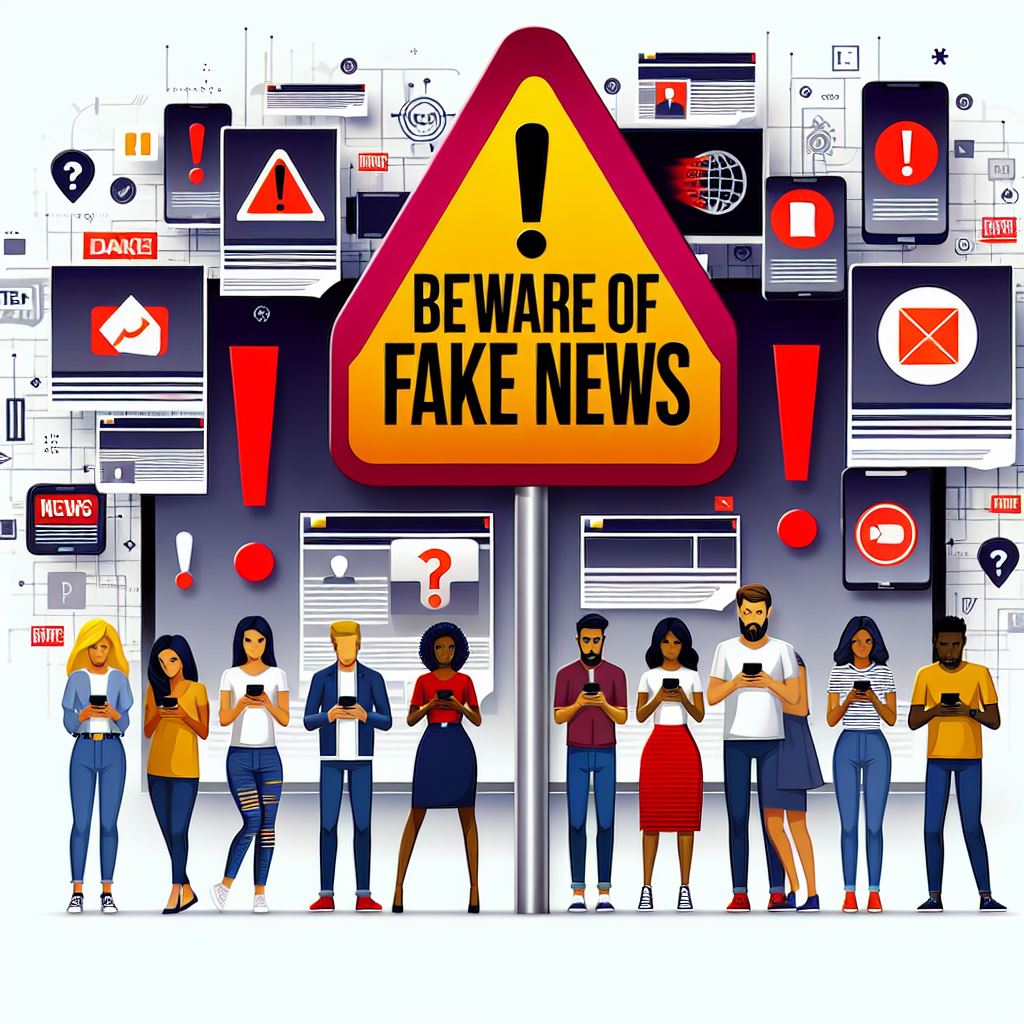
People are exposed to fake news as  reading information on their phones   from different sources and media

Source: Image generated by copilot

css.php