
When people spread information that they know is not true on the web this is disinformation. Because some people do not ask questions or find out the truth about the disinformation, they become vulnerable and believe in the disinformation. When such people also spread lies, they think is true this leads to misinformation on the web. Disinformation and misinformation have therefore become common on the web and “fake news” is everywhere on the social media.
What are the reasons for false and inaccurate information on the web?
There are many reasons people spread disinformation and misinformation. Sometimes because people want to be popular on the internet they spread lies to a particular group of people they think will believe those lies. Because such people are vulnerable and do not check how accurate that information is, they help those seeking to be popular on the web to reach more people with their lies to make them more popular.
The second reason is the use of lies and false information as a strategy to be competitive on the web. They may spread lies that could appeal to the beliefs, emotions and prejudice of the group in order to get their attention and loyalty as followers.
The other reason is that, there is currently no effective system and regulations to detect and control fake news. There are also benefits and incentives which prevent the users and authorities to control fake news on the web. The Pew Research Center interviewed several experts on The Future of Truth and Misinformation Online. According to Jason Hong, associate professor at the School of Computer Science at Carnegie Mellon University, “There are a lot of rich and unethical people, politicians, non-state actors and state actors who are strongly incentivized to get fake information out there to serve their selfish purposes.” Scott Shamp, a dean at Florida State University, also think that, “Too many groups gain power through the proliferation of inaccurate or misleading information. When there is value in misinformation, it will rule.” This presents a real challenge for controlling false information on the web.
What are some impact of AI on misinformation and disinformation on the web
Taylor McNeil said in an article How Misinformation and Disinformation Spread, the Role of AI, and How We Can Guard Against Them that “there’s a lot of misinformation and disinformation out there, and AI makes it easier than ever to create content out of thin air”. AI could have a positive role to detect, filter and control disinformation and misinformation on the web but cannot detect every information that is false. AI uses mathematical algorithms to analyze large amounts of data, so sometimes produce and spread false information. Because of its speed of processing and distributing information AI can also help people to create and spread false information faster. This has become a real threat to promoting accurate and factual information on the web that could create change historical facts, racist attacks, civil unrest, and distrust in internet information.
You
Sent by you:
generate a title about misinformation and disinformation of AI
Copilot
Sent by Copilot:
Certainly! Here are some potential titles related to misinformation and disinformation in the context of artificial intelligence (AI):

“The Role of Artificial Intelligence in Disinformation”
This title highlights how AI systems contribute to the disinformation phenomenon by creating realistic AI-generated fake content and facilitating its dissemination to targeted audiences1.
“AI Amplifies Misinformation: Threats and Challenges”
This title emphasizes how AI’s widespread adoption is posing risks to democratic processes, civil unrest, and growing distrust of media and government sources due to misinformation and disinformation2.
“Navigating the AI Minefield: Disinformation Challenges”
This title underscores the need to address the misuse of generative AI technologies, including deepfakes and synthetic content, which exacerbate the disinformation problem2
The reason why I chose this title is because disinformation and misinformation were common even before the internet and social media. But AI has made it worse on the internet. Forms of information used by AI can sometimes lead to misinformation or inaccurate news. AI can amplify false information on the web that can cause threats to society by those who may use the false information.
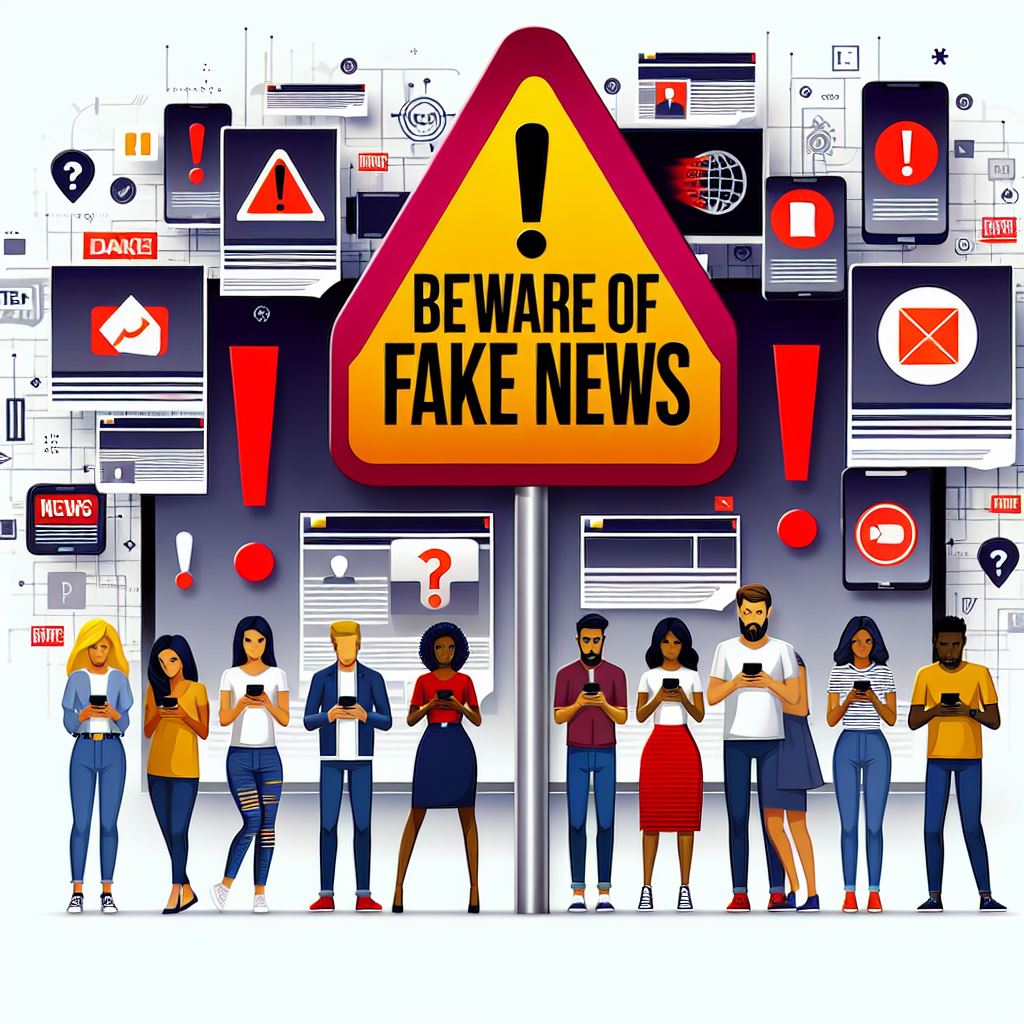
Source: Image generated by copilot
