Checkpoint Assignment

Let’s be thankful!

The topic I chose for my audio project is the importance of keeping a gratitude journal. I wanted to talk about this topic because it has so many mental health benefits. Keeping a gratitude journal encourages mindfulness, increases self-awareness, and improves one’s mental health. I also leads to better sleep and a more positive mood.

Below is a copy of my outline for my audio project on keeping a gratitude journal. I used Copilot to help me because I knew it would give me ideas of where to place the music queues, when to speak and how long to relay information to the audience in between each musical segment or sound effect. When it comes to planning the breaks between blips, I would have been lost. I have never done a informational segment before, so for me Copilot was a savior!

You

Sent by you:

write a detailed outline for a two-minute audio story about the three benefits of keeping a gratitude journal

Copilot

Sent by Copilot:

Sure! Here’s a detailed outline for a two-minute audio story about the three benefits of keeping a gratitude journal:


Title: The Power of Gratitude: Three Benefits of Keeping a Gratitude Journal

Introduction (0:00 – 0:20)

  • Opening Sound: Gentle, uplifting music fades in.
  • Narrator: “Welcome to today’s story on the power of gratitude. In just two minutes, we’ll explore three amazing benefits of keeping a gratitude journal.”

Benefit 1: Improved Mental Health (0:20 – 0:50)

  • Transition Sound: Soft chime.
  • Narrator: “First, let’s talk about mental health. Writing down what you’re grateful for can significantly reduce stress and anxiety. It shifts your focus from negative thoughts to positive ones.”
  • Example: “Imagine ending your day by jotting down three things that went well. Over time, this simple habit can lead to a more positive outlook on life.”

Benefit 2: Better Sleep (0:50 – 1:20)

  • Transition Sound: Gentle wind chime.
  • Narrator: “Next, let’s discuss sleep. Reflecting on positive experiences before bed can calm your mind and help you sleep better.”
  • Example: “Instead of worrying about tomorrow, you can fall asleep thinking about the good moments of your day, leading to a more restful night.”

Benefit 3: Enhanced Relationships (1:20 – 1:50)

  • Transition Sound: Soft bell.
  • Narrator: “Lastly, gratitude can improve your relationships. When you regularly acknowledge the kindness of others, it strengthens your connections.”
  • Example: “Writing a thank-you note or simply appreciating a friend’s support can deepen your bond and foster a sense of community.”

Conclusion (1:50 – 2:00)

  • Closing Sound: Music fades out.
  • Narrator: “So, why not start a gratitude journal today? It’s a small step that can lead to big changes in your life. Thanks for listening!”

Testing! Testing! One, two, three!

When I record my audio project, I will do it at the Hurley Convergence Center (HCC) in room 131 (the Mini Studio). Although this room has no microphones, it is easy to remedy that problem. Anyone Mary Washington student can rent recording equipment from the front desk of the HCC. All one needs is their Eagle One and they can rent the recording equipment for up to three days. The auto kit kit contains the following:

  • ZOOM H1n Audio Recorder
  • RODE Wireless Go II Microphone (includes: 2x wireless microphones and 1x wireless receiver)
  • 1/8″ Audio Cable
  • MicroSD card
  • SD card reader
  • USB cable x 3
  • Lightning Accessory Cable
  • Carrying Case

This audio clip was done with the ZOOM H1 Audio Recorder. It is sleek, handheld, and you can use the Micro SD card to record your sound on. Once you’re done, load the MicroSD card into the SD card reader, insert it into your computer, upload your file, and you’re done!

ZOOM0003

Heavy is the Hand that Holds the Spoon: Podcasting the UMW Home Dining Experience- Outline

Topic

For the podcast assignment, I chose to create a podcast on student’s experience with learning how to cook while on campus. For many students, college is the first taste of independence, which means many students are beginning to experiment with cooking on their own with a limited college budget. Through this podcast, I want to explore what college students choose to make come meal time and how being on campus affects this decision.

Outline

0-20 Seconds

Ambience of kitchen, people talking while eating food in the background

Introduction of place (Mary Washington student accommodations- types of kitchen)

Introduce main question of Podcast (Are students cooking in their accommodation kitchens? How have their cooking habits changed since they’ve been in college?)

Podcast Title (Heavy is the Hand that Holds the Spoon: Podcasting the UMW Dining Experience) and introduction of host (Meaghan Van Dyke)

20-30 Seconds

Upbeat, contemplative music

Introduction of two University accommodations (Eagle Landing and UMW Apartments)

30-55 Seconds

Ambiance of cooking in kitchen

Introduction of Eagle Landing interviewees

First interview (what do you like to cook? Why? Where did you learn to cook this?

55-80 Seconds

Ambiance of kitchen, people talking

Introduction of UMW Apartment interviewees

Second interview (what do you like to cook? Why? Where did you learn to cook this?

80-100 Seconds

Contemplative music

Interviews with both UMW Apartments and Eagle Landing residents (Do you feel like you are limited with what you could make with finances/ accommodation appliances?)

100-110 Seconds

Why does this topic matter?

Interviews with both UMW Apartments and Eagle Landing (Why does this topic matter to you/UMW faculty)

110-120 Seconds

Conclusion and sign-off

Ambient kitchen sounds

Test Recording

Transcript

“Hi! My name is Meaghan Van Dyke, and for breakfast I had two chocolate chip muffins and for dinner I will have pizza.”

Audio Recording Details

This recording is set in my home kitchen, since the ambience of cooking in the background matches the ambience of cooking in a college dorm the closest. I recorded this using the voice memo feature on my phone, which gathers audio from the speakers at the bottom end of the phone. I did not use AI at all in the process of planning or recording this podcast episode.

Podcasting Work in Progress

Who/What/Where Will I be Recording?

For the podcast, I am going to be discussing why getting involved in school extracurriculars improves your grades. It will just be me talking, and I am going to record using my phone’s microphone and I will be reserving a study room in the library to record. I’m not exactly sure what my sound effects will be, but I was thinking the hustle and bustle in the CRUC could be cool.

My Rough Script:

Introduction (0-10 seconds)

Opening Hook: “Ever wondered why some students seem to excel in both academics and extracurriculars?”

Thesis Statement: Getting involved at school leads to better grades, let’s explore how!

Background (10-20)

For context, Alexander Astin describes student involvement as “the amount of physical and psychological energy that the student devotes to the academic experience.” That will be the definition I’m using when referring to student involvement

Point 1: Skill Development (20-50 seconds)

Explanation: Extracurricular activities help students develop essential skills like leadership, teamwork, time management, and problem-solving.

Evidence: Skills such as leadership, time management, and teamwork are taught in classes but the full extent of them can’t be understood until they are applied in the real world. For example, students will learn a little bit about teamwork in a group project, but they won’t understand the full extent of it because at the end of the day they just want the best grade they can get. A tea working towards a common goal, making mistakes and learning from them is really how student can learn teamwork.

Personal Anecdote: It also allows them to learn skills such as Canva or Microsoft Word from other students when classes don’t normally go over these applications. When I started working at SAE, I was working with a girl named Sky. Sky and I were tasked to make a post for the Instagram, letting people know that UMW’ club carnival had been moved inside. I saw Sky holding down the shift button while grouping objects that she wanted to move together. I had no idea this was a thing, and for years had been frustrated by the clicking and dragging method that would almost always pick up something that I didn’t want to be moved. Had I not worked with Sky on those posts, I never would have learned this much easier method.

Point 2: Building a Support Network (50-80 seconds)

Explanation: When a student spends a lot of time with a specific club or job, they build relationships with other students and staff

Evidence: Alexander Astin said “The student is spending time on the campus, thus increasing the likelihood that he or she will come into contact with other students, professors, and college staff… Retention suffers, however, if the student works off campus at a full-time job. Because the student is spending considerable time and energy on nonacademic activities that are usually unrelated to student life, full-time work off campus decreases the time and energy that the student can devote to studies and other campus activities.

This takes us to out last point:

Personal growth and confidence (80-100 seconds)

Explanation: When coming to college, it is a lot of student’s first time being independent and managing their life. Confidence is crucial for a student’s success, and they gain it through those newfound skills and support network.

Evidence: In Nancy Schlossberg’s “Marginality and Mattering” she cites a study by Morris Rosenberg, who says ‘mattering is a motive: the feeling that others depend on us, are interested in us, are concerned with our fate, or experience us as an ego-extension exercises a powerful influence on our actions’ This leads to students caring about their academics and work. Students who feel they matter are less likely to act out and ruin what they have worked for.

Conclusion (100-120 seconds)

Summary: It is important for students to get involved because it teaches them new skills, it fosters a strong support network, and it leads to personal confidence inside and outside of the classroom

For more information on what I’ve discussed you can check out my sources: Alexander Astin’s Theory of Student Involvement, Nancy Schlossberg’s Marginality and Mattering, and Morris Rosenberg’s Mattering: Inferred Significance to Parents and Mental Health Among Adolescents.

So, if you want to boost your grades, consider joining a club, job, or sports team at your school. It might just be the key to your success.

My Audio Recording

Reflection

This topic is about how getting involved at school improves your academic success. I found this topic interesting because one would think that the more involved you get, the less time you have to focus on school. However, I have learned from personal experience in high school and college that my grades improve when I get more involved. I just used the microphone on my phone for my test recording and then used my AirPods to listen to the recording. I used Copilot to help me format the script. I needed some assistance because the way I was formatting the script was turning it into an essay. Copilot helped me with the timing and breaking up the ideas.

Podcast Outline

My Detailed Outline

Details

My detailed outline for my two-minute podcast will be about Dancing with the Stars Season 33

  • I will record in a quiet room with no background noise: unless I decide to add the sound effects from the show
  • I will be using my iPhone or an online voice recording website called, “vocaroo”

The Outline

I. Introduction (15 seconds)

  1. Opening Line:
    • “Get ready for glitz, glam, and gravity-defying moves—Season 33 of Dancing with the Stars is here!”
  2. Context:
    • Brief mention that DWTS is a beloved reality TV show where celebrities pair with professional dancers to compete for the coveted Mirrorball Trophy.
    • Acknowledge that Season 33 continues the tradition of bringing surprising cast members, dramatic performances, and judge critiques.

II. Cast & Star Power (25 seconds)

  1. Diverse Celebrity Lineup:
    • Highlight a few standout celebrity contestants from different backgrounds (actors, athletes, social media influencers, etc.).
    • “This season boasts a mix of beloved TV stars, athletes making their dance floor debut, and viral social media sensations.”
  2. Fan Favorites:
    • Discuss returning pro dancers who have built large followings, noting any past winners or fan favorites.
    • Mention any celebrity/pro pairings that have created buzz online.

III. Memorable Performances & Themes (30 seconds)

  1. Standout Performances:
    • Reference a few memorable or viral performances from the early weeks, focusing on the most exciting dances.
    • Describe the diversity of dance styles: from classic ballroom to electrifying contemporary routines.
  2. Theme Nights:
    • Mention iconic theme nights, such as Disney Night, Latin Night, or Tribute performances.
    • Highlight how these themed nights shape the creative direction of the show.

IV. Judges & Scores (20 seconds)

  1. Judges Panel:
    • Briefly introduce the judges, highlighting their unique personalities and styles (e.g., Len Goodman’s traditionalism, Derek Hough’s technical expertise).
  2. Scores & Critiques:
    • Mention any early frontrunners in the competition or surprising low scores.
    • Comment on any controversies or moments when the judges disagreed.

V. Audience Engagement & Voting (15 seconds)

  1. Fan Participation:
    • Describe how fans can vote for their favorite couples through social media or text, making the show interactive.
    • “This season, your vote matters more than ever—fans at home are helping decide who stays and who goes!”
  2. Closing Teaser:
    • End with an exciting teaser for the upcoming episodes: “With new twists and challenges ahead, this season is shaping up to be one of the fiercest yet!”

VI. Conclusion (15 seconds)

  1. Final Line:
    • Wrap up by saying something like, “Whether you’re rooting for your favorite star or tuning in for the jaw-dropping routines, Season 33 is bringing the heat on Dancing with the Stars!”
  2. Encourage Tuning In:
    • Mention the day and time of the next episode, and where people can watch (e.g., ABC, streaming platforms).

My Test Recording

More Information

My topic

My podcast will be about Dancing with the Stars Season 33, which is the current season right now. I chose this topic because my best friends and I watch the show each week and we are so entertained, I want to speak about it and get others to tune in as well. Some of our favorite celebrities are on this season. This show has brought us together and I wold love to inspire others to do the same.

Equipment

I will be using my Iphone to record, as I know the quality will be better and I will be able to transport it easier as I talk. I will be in a quiet room with no background noise, however if time allows, I am going to play the theme music for a few seconds.

AI

I used AI to help me write this outline as it planned my timing for me and gave me the categories to talk about in an organized fashion. I will fill in the specific details as to the stars I am talking about, the iconic theme nights I found interesting, and my reasonings for wanting my audience to be involved.

I’m Starting a Podcast!

Kinda, sorta…not really.

Oof. Was that to clickbaity? Sorryyyy (not).

For real though. I’ve had so many people tell me I should start a podcast but I have zero time for that between school, my extra curriculars, and maintaining my relationships. Especially because… how TF do you even do that? You’re telling me I have to learn how to do the podcast before actually doing the podcast? Bruh.

Lucky for me, I have to learn how to for class anyways (I need to learn how to insert emojis on these posts because I keep wanting to add them like I’m texting you LOL). Aaand lucky for you, you get to see the process unfold. So in this post, you’ll get to see my outline for a short audio I’ll be using for a visual recording in the future, and a test audio.

The Outline

Professor Cartland says no more or less than two minutes! Wish me luck…

WHO: Me! I’ll be riding solo (for the most part). My boyfriend works at the protein bar at the gym I go to so he may very well end up in a few shots or behind the camera for the visual recordings later on.

WHERE: So, I plan on recording all/most visuals at my gym, Fitness 1440. It’s a 24/7 gym, so I can go at times where there isn’t too many people. T

WHAT: I have a set of mini mics that Bluetooth to my phone that I record my social media content with, so I’m going to use those for both the audio recording and my test snippet. I got them off of Amazon and they’re goated. I also plan on using either cinematic mode on my iPhone 15 or my Canon850D to record visuals later on (or both). Here are some sounds I plan on including in my audio:

  • Weights slamming (the forbidden gym action)
  • Feet running on the treadmill
  • Hands rubbing chalk

Here’s my mic test snippet.

And the visuals I’m envisioning:

  • Gym locker opening and me putting stuff in
  • Putting headphones on
  • Hands clapping with chalk
  • Weights slamming (zoom in)
  • Putting plates on the barbell (zoom in)
  • Me deadlifting (lol)
  • Receiving a protein shake from the protein bar
  • Zoom in of me putting on lever belt
  • Me smiling in the mirror
  • Shot over my shoulder of me looking at pictures of me when I first started my fitness journey (zoom in)

The Outline

Confidence in the Gym: From Intimidation to Empowerment

My topic gym intimidation. As a coach and creator, one thing I hear so often is people caring too much about people looking at them in the gym or judging, being scared to go alone, scared to mess up or not know how to use equipment. And all I hear when people say these things are that they care more about what other people think than what’s best for themselves, so I want to talk about it here (in a more gentle manner).

Introduction (0:00 – 0:15)

“I don’t like going without someone. I don’t know how to use any of the equipment. I’m scared of people looking at me. I’m scared of doing an exercise wrong. I don’t want to look stupid. What if I fail? I don’t know how. We’re literally all gonna die one day. No excuses, just go for it.”

The Intimidation (0:16 – 0:45)

*2-3 secs high intensity music* Listen, I’ll be upfront: I don’t have some intense story about overcoming my Intimidation of the gym because I’ve always been pretty comfortable in the athletic space. My parents both workout, I was a high school athlete. It was never an issue for me. And at this point you’re probably wondering how that’s relevant to you or someone who is working on overcoming that gym Intimidation. No I may not have an ‘overcomer’ story, but I do know what fitness has added to my life and what it brought me out of and in turn cant imagine what my life would look like now had I been afraid of what other people thought about me at the gym and let that stop me from starting.

(0:46 – 1:10)

When I started implementing a fitness routine into my life, the gym found me after gaining 15 pounds in three months, tired no matter HOW much I slept, lethargic, low focus, extremely bloated, the worst acne I’d ever experienced, and after a couple visits to the ER because of health related issues. For me, I started going to the gym because I had no other option. I had hit an extremely low point for myself. I NEEDED that change, and I was ready to make it. I think it’s unfortunate that it took me feeling so low in order to take both my mental and physical health seriously.

(1:11 – 1:45)

And for people that have never felt their own low for themselves, that low that drives you to implement change in your life, I cant blame them for letting what others might think of them at the gym stop them from starting. However, now that I’ve felt seen and felt the fruit of my labor, it makes me that much happier that I took action because I FEEL so much better physically and I’ve never been so confident, so naturally t makes me so much more hopeful that others would do the same for themselves.

Closing (1:46 – 2:00)

All of the people you see in person and online that you perceive as pros in the gym, all started as beginners. Hell, we were all babies that didn’t know how to walk, but we fell and got up to try again. All the people you see in the gym are there for the same reason as you: to better themselves. Don’t let what you THINK they’re thinking stop you from working on you and taking care of YOUR health. That’s like giving them a remote control to you. You deserve to take up space and there is room for you to learn and grow and experience failure in the pursuit of greatness. It all starts with saying ‘yes’ to yourself.

Images

website header image

Why?

I chose the first image as my site icon because I wanted something simple with my favorite colors. I chose to put my initials on the picture because this is my website and I wanted it to be personalized. I wanted something simple that says something about me. I chose to create the second image as the header image for my website because it also included my favorite colors but my name as well so others know its my website.

The Process

The process of creating images was overall fun and interesting. I enjoyed creating my images. I used the website Canva to create my two images. I really like this website because its super easy to use and makes creating images a fun process. I chose the file type JPEG because this is the best file for downloading images and sharing them.

Copyright and Attribution

Copyright

Copyright is a type of intellectual property law that protects original works of authorship from unauthorized use. Copyright is very important on the web because it keeps someone from copying someone else’s work. For my website I chose the original copyright, “all rights deserved” because I want to obtain all legal rights to my work.

Ethical importance of Copyright

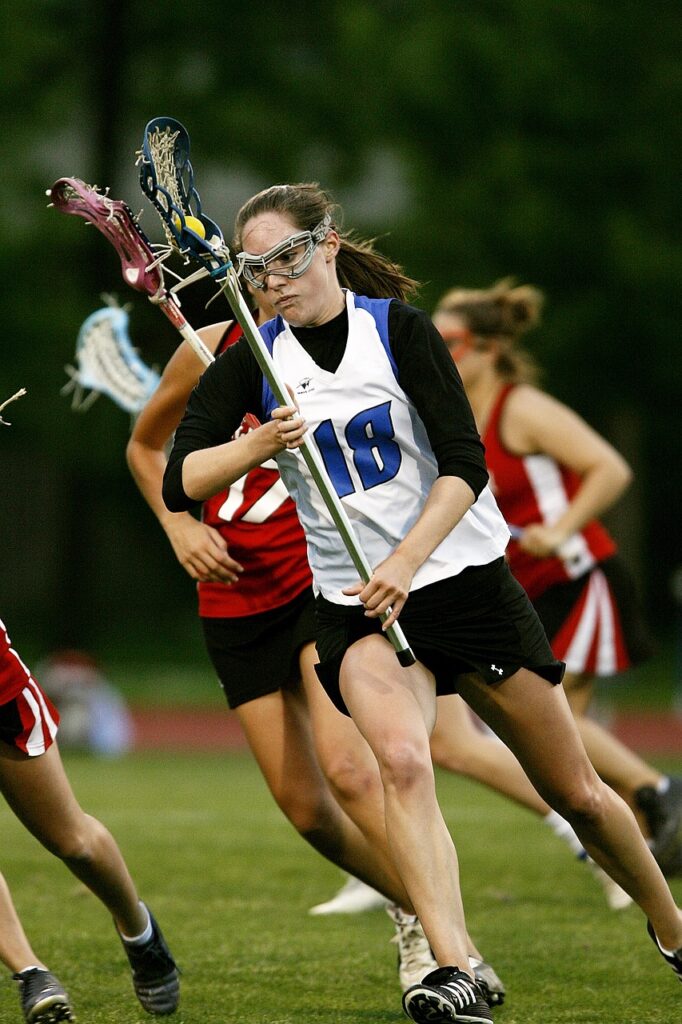
Making sure you use others worth ethically is very important. In fact, lots of people get in trouble for using others work as their own. It is important to give credit to those who did the work and to recognize them if speaking, writing, or referencing someone else’s work. Here is a reference on making sure you’re using others work ethically. The two pictures I chose bellow are from the website Pixabay. I chose them because I love dogs and lacrosse. I got them from a copyright-free website.

puppy in little basket
Image from Pixabay which were created by vlaaitje.

Imagine from Pixabay, which was created by KeithJJ.

Who am I on the Web?

image of who am I?

Domain Name

I chose the domain name makennahadden24.com because my first name is Makenna and my last name is Hadden. I chose the number 24 because it is my number for lacrosse and has been one of my lucky numbers for many years.

The web and I

Who am I on the web? I use currently the web for social media. I also read news articles and do certain things for school. I have been a web user since I was in 7th grade and have continued to enjoy using the web since. My day to day uses are usually apps like Instagram, Snap Chat, and Tiktok. In my other free time I like to use the web to online shop or check the daily news on New York Times. Here is a link to help discover your online identity

Podcast Overview

Topic

My podcast will be focusing on how sports are an important activity for families to enjoy together. The main topics of my audio story will be: bonding, learning, and memory making that occur because of the viewing of sports.

Plan

  1. Story
    1. The importance of sports/ watching sports with family. My personal experience with sports in my family. 
  2. Goal
    1. Inform the audience on the role of sports within a family. 
  3. Angle
    1. There is a lot of emphasis placed on the role of playing sports in a child’s life, but not much focus on how watching sports can be beneficial for a family unit. 
  4. Format
    1. Monologue
      1. Monologue because I can share my personal experience of my family watching sports. 
  5. Research
    1. I would need to have specific support that shows that watching sports actually has evidence based benefits within a family.
      1. Meaningfulness of Watching Sports as a Family
      2. Benefits of Watching Sports with Family
  6. Locations/ Subjects
    1. I will probably use my house as the location. My background noise is mostly going to be the sound of a football game on in the house and my family talking and joking during it.
  7. Budget/ Equipment
    1. I plan on using things I have at home for this, such as my phone and the microphone on my wired headphones for recording, and then my laptop for editing. 
  8. Time
    1. I think I should be able to tell this story in the allotted time. My script is very detailed and I plan on practicing beforehand to ensure that I am able to get my point across clearly and concisely in the time.

Outline

In order to create my outline, I first devised my plan for the podcast and then utilized Microsoft Copilot as a starting point for my outline. I then went more in depth and created a script.

title – there’s more to life than sports

intro (0:00-0:20)

– introduce myself and the topic 

“Hey guys, this is Alexa and today I’m going to share why I think that sports are a crucial bonding activity for families.”

– background of topic 

“I’m sure most people have heard the phrase, ‘there’s more to life than sports’ and I completely agree. There is more to life than sports, but sports provide a way for us to appreciate the most important thing: our families.”

– intro music 

point 1: connecting and bonding (0:20-0:50)

– background sounds of family talking and laughing together

– explain relevance 

“One of the most evident benefits of watching sports together is that it sets aside a specific time for families to gather together and relax. No matter the sport, as a family gathers together around the tv, they are talking and laughing, and spending important quality time together.”

– personal experience

“From as early as I can remember, my family has sat together and watched football on Sundays. Even though I don’t necessarily enjoy the sport itself, I always look forward to this time together. Football Sundays are a big deal in my family and are a tradition I plan to continue within my own family one day.”

point 2: learning (0:50-1:20)

– background sounds of game commentary

– explain relevance 

“Sports are an important part of any child’s life. There are many studies that show that sports are important for not only a child’s physical health, but also their mental well-being. This can also be the case with watching sports. Children can watch with their parents and learn the rules and the intricacies of the game.”

– personal experience

“As I mentioned earlier, I was never a big sports fan. I did not and still don’t enjoy playing sports, but while watching sports with my dad and brothers, I learned a lot about competition and sportsmanship. Growing up, the boys’ love for sports extended outside of the tv as well. On countless Sundays, there would be family football games in the front yard, where my brothers attempted to teach me specific routes. Learning about sports has led me to have a healthy amount of competitiveness and taught me a lot about the world.”

point 3: creating memories (1:20-1:50)

– background sounds of stadium cheering 

– explain relevance

“The memories a family makes while watching sports are numerous. From seeing your favorite team win the Superbowl, to attempting a new recipe for your family to try. These are the stories that will be passed down for generations to come.”

– personal experience

“For my dad’s birthday a couple years ago, my brothers and I took him to a Redskins game, which was my first football game ever and one of my favorite memories. Another core memory I have is all the baseball games my family would attend while I was younger. My dad loves to talk about his memories of watching football with his dad and his grandpa, which makes our time as a family now, even more special.” 

conclusion (1:50-2:00)

– summary of topic

“Long story short, grab your family, pick a sport, and enjoy the game. Because while you’re rooting for your favorite team, you’re learning that there’s more to life than sports.” 

– outro music 

My Sample Recording

As mentioned above, I recorded this sample in my bedroom, while using my phone and wired headphones for the microphone. My sample recording simply contains what I was planning to eat for breakfast this day.

Podcast: Our Shrinking Attention Span

Episode synopsis

This episode centers around the ever shrinking attention span of people in the modern age. Research indicates that in the past twenty years the average person’s attention span has decreased significantly. This is due to excessive distractions attributed to social media and ever increasing technology use. The episode seeks to identify problems contributing to our declining attention span and help users identify strategies they can use to increase their concentration and attention span.

Behind the Scenes

The audio sample posted here was recorded utilizing Sennheiser headphones as the microphone, and edited on a MacBook laptop. Soundtrap was used as the editing software in which recordings were stored and sound effects were added in. Royalty free music was downloaded from Bensound.com and used for non commercial purposes.

Audio Sample:

Script/outline for podcast:

Topic: How to improve attention span

  • 0-20 seconds
    • Podcast intro: Welcome audience to Christian Speaks (To You) podcast.
    • Intro music: 
    • Topic intro: Explain that increasing technology usage is leading to attention spans being shorter. Studies conducted in 2003 showed average attention span while on a webpage was close to 3 minutes, while as of 2023, it’s about 47 seconds.
  • 20-40 seconds
    • Background on topic: Technology provides a greater number of distractions than such as texts, and social media notifications. 1
    • Why this topic is important: This is important because people make more errors when they are distracted, it takes longer to complete assignments and tasks, and stress levels increase when focusing on multiple different things.1

Ways to increase attention span.

  • 40-60 seconds
    • First point about topic: Reading can help to increase attention span by training the mind to concentrate on a singular task. A good tip is to mute your phone to avoid distractions and focus on reading for 20-30 minutes straight without losing concentration. (Insert sound effect recording of pages turning in a book, which I will record myself). 
  • 60-80 seconds
    • Second point about topic: The spider technique. Explain about what the spider technique is and how this metaphor can help you understand how to ignore distractions when they come up. You can also incorporate the phrase “Be Here Now” which is said after a distraction arises to help refocus your brain on the topic at hand.
  • 80-100 seconds
    • Third point about topic: Other important tips for improving your attention span that can be helpful to try: Exercise such as jogging or walking (Record sounds on outdoor walk)., helps to release endorphins and get blood flowing which will improve brain function. Giving yourself a reward for completing an assignment or task, such as rewarding yourself with a snack after reading for 30 mins, etc. 
  • 100-120 seconds
    • Conclusion: Thank audience for listening and hope that some of the tips can be implemented into your life and be of use. 
    • Acknowledgments: Thank CBS, George Washington University, and Kansas State for their research being published and utilized by this podcast.
    • Sign off: Thank audience once again and say goodbye to listeners.

[1] https://www.cbsnews.com/news/are-attention-spans-getting-shorter-and-does-it-matter/

[2] https://healthcaremba.gwu.edu/blog/how-to-increase-attention-span

[3] https://www.k-state.edu/counseling/services/resources/self_help/improvingconcentration.html

css.php