Final Project Proposal

Intended Project

What, Where, and Why?

For my project, I intend to build out a subdomain specifically dedicated to my writing. I want to blog about my progress, sneak peeks of characters and scenes, and explore character development. I would also like to discuss different shows and movies I am interested in that has characters that inspire me. This matters to me because writing is my top passion and my favorite creative outlet. It means a lot to me to have a place to put what I’m working on.

For Whom?

I want to interact with people who also enjoy writing. Therefore, my intended audience is anyone who is interested in the creative arts, specifically writing. I would also like to find people that are writers themselves and interested in discussing their work.

Media and Accessibility

What Kind of Media?

I will include various forms of media for this project. Some examples of these may be written blogs, images of character sheets, audio walking through the process, and embedded media that shows inspiration videos.

Accessibility Plan

Throughout my project, I will be sure to follow all accessibility guidelines. This includes but isn’t limited to heading hierarchy, descriptive alt text for all images, proper color contrast, captions for videos, and transcripts for all media with auditory aspects.

Project Proposal

A picture of a man holding a rake and a women holding a box of flowers in the middle of a garden.
By Vitaly Gariev from Pexels

My Project Idea

For my project, I want to create a guide for people that will help them learn how to start and maintain their own garden. This project is important to me because I think taking care of a garden has many benefits for both people and the environment. For example, it allows you to take care of the environment, build relationships, and learn many important skills. Gardening allows you to become connected with nature as well.

My Media Plan

For this project, I plan on posting my project on my subdomain. I want to keep my main domain separate from my project so I can decide how I want to use my main domain in the future. My intended audience is anybody that is looking to start a garden or want to join a community garden. I plan on creating a slideshow on Canva so I can explain the importance and benefits of gardens. I plan on using Wordwall to make a word-matching activity to help my audience learn about gardening tools and practices. I also plan on making a voice recording that will talk about ways to start and maintain a garden.

Accessibility

To make sure my content is accessible I will write a transcript for my audio recording. I will also make sure my presentation is easy to read by using clear fonts and contrasting colors. For my Wordwall activity, I will make sure to use simple wording so the questions are easy to understand.

Brown University Guide on the Benefits of Gardening

Multi-media Checkpoint Assignment

A photo of a piece of land that is filled with plastic trash.
Image by Sohail Nawaz from Pexels

My Message

For my project, I wanted to talk about how plastic pollution harms the environment and what people can do about it. Since I have taken many environmental science classes before, it has made me very interested in spreading awareness about environmental issues. With my project, I want to teach people about the harmful effects of plastic pollution. I also wanted people to know how to reduce the amount of plastic waste they produce. My intended audience is young adults and students who are interested in learning about environmental issues and how they can help.

My Media Elements

For my first piece of media, I plan on creating flashcards using Wordwall about the effects of plastic pollution on the environment. My flashcards will ask questions about how plastic pollution harms wildlife and the problems it creates. I think this will help test my audience’s knowledge about this topic and make it more memorable. For my second piece of media, I plan on making an audio recording that will discuss the effects of plastic pollution on the planet and offer my audience ways to reduce the amount of plastic waste they produce. For this piece of media, I plan on using a voice recorder app on my phone. For my final piece of media, I plan on creating a slideshow showing the causes and effects of plastic pollution and ways people can reduce it. For this piece of media, I plan on using Canva to help make my presentation more memorable and appealing. I plan on sharing all three of my media pieces on WordPress.

Accessibility

To make my audio recording accessible, I will write a transcript for my audience to follow. For my flashcards, I will make sure to use clear and simple wording. For my slideshow, I will use fonts that are easy to read, contrasting colors, and alt text for the images I use. I believe doing these things will make all three types of my media pieces accessible and help me reach a wider audience.

EPA Guide on Plastic Pollution

Multimedia – Character Creation Process

Message Overview

For this project, I want to explore how to make original characters that feel real and purposeful. I would like to communicate a specific method I have had the most success with. It begins with a clear role, a key relationship, and their biggest struggle. This results in characters with strong, reasonable actions, a compelling story fueled by their struggles, and interesting dynamics with other characters.

Intended Audience

The intended audience for this project is writers, artists, and anyone who enjoys making characters for stories, role plays, or even ones to be inserted into popular media as their own character. This is for people anywhere from beginner to expert and just for fun to professional.

Media Elements

Platform used

For this project, I will use the platform WordPress because it will allow me to embed and provide links to the various forms of media. I can also use the blog space to write explanations between each type of media.

Video

I plan to record a video using diagrams and other visuals to explain the different processes of making characters. Then, I will demonstrate how I make characters with purpose based on particular elements. A visual walkthrough is helpful because it can provide clarity and a display for the audience to follow.

Audio

For the audio, I will demonstrate different character voice styles through introductions. I will explain how the tone and style play a role in how the character is portrayed. It also shows their role and what they might fear. The audio helps to present an example of characters through the sense of hearing where the audience can listen to the finer details without visual material.

Interactive Element

This would involve questions for the user to answer that would lead them to creating their own character. It would utilize a thoughtful process and open-ended answers as well as ideas the user could choose from. This allows the audience to answer questions that will guide the audience through a method similar to mine.

Accessibility

Due to the importance of accessibility, I will make sure that it remains a top priority. I will put descriptive alt text on all images, my audio will include a transcript, the video will use captions and a transcript, proper color contrast for all media, and headings on my blog for screen readers. Further, I will provide attribution for all additional media used.

The Importance of Children’s Literacy

A picture of a adult teaching a boy how to read a book.
Image by Mikhail Nilov from Pexels

Introduction

For my project, I chose to talk about children’s literacy and how it’s an incredibly important part of their lives. I talked about how reading teaches children many important skills and how adults can help children with their literacy skills. I used Little Free Library and Maryville University to help support my claims.

My Interactive Project

Instructions

For this assignment, I made nine flashcards that you can click to see the other side. There is an option for a green check mark or a red X to help you memorize the answers. There is also an option to play music while you go through the flashcards.

Credits

My music and images were provided by Wordwall.

My Process

I chose Wordwall because it allowed me to make interactive flashcards using an interesting template with music. This would allow people to easily learn more about my topic. I thought this best fit my topic so I could make learning about children’s literacy, which is an important topic, more memorable.

Interactive Game Exploring the Concepts of Blue Light

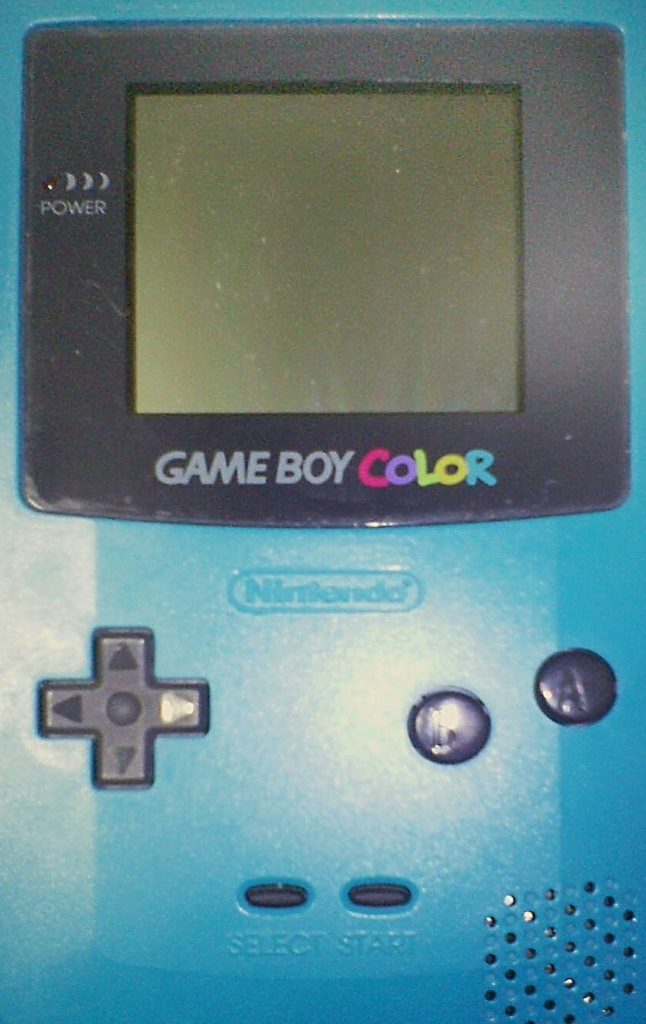
Blue Game Boy Color with speaker in the bottom right color. In the middle it has the Nintendo logo, with the text "Game Boy Color," and a screen above that where the game would be played.
Game Boy Color by Pia Carrot, licensed under CC BY-SA 2.5.

Topic Introduction

My topic explores the truth about how blue light affects sleep. I consider this a myth because its not just blue light. Rather, all light has some sort of effect on sleep. Additionally, I explain the science behind this and the chemical, melatonin, that causes you to get tired. Lastly, I provide tips to help reduce the affect light has on sleep.

Sources

Melatonin and Sleep – NIH

Exposure to Room Light before Bedtime – JCEM

Melatonin Suppression by Light – NIH

Circadian Rhythm – Sleep Foundation

Melatonin – Mayo Clinic

The Game Itself

Blue Light Game

Instructions

My game is connections which is where you have to match things into 4 unknown categories but drawing similarities to put them together. If you get them correct, the category will be revealed. Good luck!

Credits

Flippity.net (provided the game template)

Blue Game Boy (image used)

Process of Making the Interactive Game

I selected this tool because it combines interactive elements and concepts. It allows the user to internalize the information discussed in my podcast and video. Additionally, it helps to get my point across. The connections game specifically is fun for the user and helps them to draw similarities between each concept. I enjoyed being able to make something that gives my audience some control in how they interact with my topic. One of the biggest challenges was that I originally was choosing a crossword puzzle but I had to abandon that one because it was only available for printing, not online.

Visual Blue: Visualization of a Podcast

Project Overview

Topic

My project dives into the truth about how blue light affects sleep. I consider this a myth because its not just blue light. Rather, all light has some sort of effect on melatonin production, which is what tells your body that it is time to go to bed.

Sources

Melatonin and Sleep – NIH

Exposure to Room Light before Bedtime – JCEM

Melatonin Suppression by Light – NIH

Circadian Rhythm – Sleep Foundation

Melatonin – Mayo Clinic

Attributions

Click to View

A Mother Taking Her Daughter’s Cellphone During Mealtime
Video by Kaboompics from https://www.pexels.com/video/a-mother-taking-her-daughter-s-cellphone-during-mealtime-6958039/

Closeup Eye Opening in Blue Light
Video by Karl Byron from https://www.pexels.com/video/closeup-eye-opening-in-blue-light-36816949/

Close Up Video of a Man’s Face
Video by Mikhail Nilov from https://www.pexels.com/video/close-up-video-of-a-man-s-face-6964017/

Low Angle View of Colored Strobe Lights
Video by Nino Souza from https://www.pexels.com/video/low-angle-view-of-colored-strobe-lights-12991802/

Clock, Loop, Fast
Video by BlenderTimer from https://pixabay.com/videos/clock-loop-fast-time-watch-hours-100386/

Man, Dancer, Dance
Video by ChristianBodhi from https://pixabay.com/videos/man-dancer-dance-disco-joy-flow-71902/

Two Cell Phones Sitting Next to Each Other on a Table
Photo from https://unsplash.com/photos/two-cell-phones-sitting-next-to-each-other-on-a-table-hhniivY7iyw

Visible Wavelengths Diagram
“VisibleWavelengths.png” by DrSciComm, via Wikimedia Commons, licensed under CC BY-SA 4.0
https://commons.wikimedia.org/wiki/File:VisibleWavelengths.png
https://creativecommons.org/licenses/by-sa/4.0/

Intrinsically Photosensitive Retinal Ganglion Cell
“Intrinsically photosensitive retinal ganglion cell,” Wikipedia, The Free Encyclopedia.
https://en.wikipedia.org/wiki/Intrinsically_photosensitive_retinal_ganglion_cell

Video Production

Process, Recording, and How I Found Additional Material

The process overall wasn’t too bad once I figured out what I was doing. It did take a lot of brainstorming to nail down what I wanted for the A-Roll vs the B-roll. Filming it was about making sure the angles looked good and my voice was audible. Lastly, I had to edit all of the clips together to make it a coherent video. I used transitions to help add flow between parts. I found my additional material by using a variety of key words to get as close as possible to the clips I wanted to use.

Editing Software and Streaming Platform (and why I chose them)

The editing software I used was Microsoft Clipchamp because it was simple to use and I have experience with using this tool. I also liked that it had a built in caption generating. However, it did have one issue with captions where you couldn’t edit the exact time stamps which resulted in some of my captions not being typed the best. For a streaming platform, I used Vimeo because I have seen it used for class and home projects. It was also really easy to upload. I didn’t use YouTube because I use my account for viewing, not making content.

Visualizing the Podcast – Video Production

Details in the Process

Capturing Footage – Equipment

For my recordings, I used my Samsung Galaxy S25 Ultra to capture the footage. Due to my topic having to do with blue light, I found an old backup phone. It was my LG G8 ThinQ, which has a much worse camera, so I only used it as a prop. I asked my boyfriend to help with recording when I had to be in frame. Additionally, I offered him to play a part at the end which he gladly accepted.

Additional Visual Material

The additional material I chose included a couple of diagrams that explain the biology side of things. Then, I found one image to help show one of my points. Lastly, the remaining material is all videos that visually support the audio from my podcast.

Basis for the Video

My Shot List

Click to View
Narration Visuals 
Background noise of an alarm blaring, person pressing snooze, and shuffling with an audible yawn Record: person laying in bed then alarm and shuffling a yawn (sleep mask on person) 
Have your parents ever demanded your phone at night so you would actually go to bed? Find: stock footage of adults with hands out, beckoning 
Sure, it was probably because you like to doomscroll and would end up falling asleep around 3am. Record: person scrolling at night with phone on bright 
But the fear of blue light definitely plays a role. What if I told you that it might not just be blue light that keeps you up at night? Find: person looking shocked at blue light 
Within your retina are specialized cells called ipRGCs (intrinsically photosensitive retinal ganglion cells) which are like built-in alarm clocks. Find: diagram of ipRGCs 
They measure the amount of light so they can set your body’s master clock. Find: high cortisol alert diagram but with high vs low light 
Morning light signals cortisol to keep you awake and simultaneously your body starts a 16-hour countdown and once this hits zero, it releases melatonin to make you sleepy. Find: clock ticking by on fast forward 
This is exactly why blue light should be considered a myth. Though ipRGCs are most sensitive to blue light wavelengths, scientific studies have shown that total light intensity matters almost as much. Find: guy wearing glasses bluelight filtered 
A 2011 study published by The Journal of Clinical Endocrinology & Metabolism states “As a result of this exposure to electrical light between dusk and bedtime, presleep levels of melatonin were reduced by 71.4%, and total daily levels of melatonin were reduced by about 12.5%.” Make: text on screen of the quote 
Background noise of another alarm going off, myself saying “Hey! I’m not done yet,” Record: turn around (like a 4th wall break) and say that 
The solution isn’t about the color of light coming out of the screen. Rather, it is about the amount of light. Find: wavelength diagram and intense light plus dim light 
If you want to use your phone at night, the best solution is to dim your screen and keep the phone further away from your face. You might want to keep your body clock in check!” Record: dimming the screen, moving it away from the face

Recorded Footage

Video Project Footage

Video Project Checkpoint

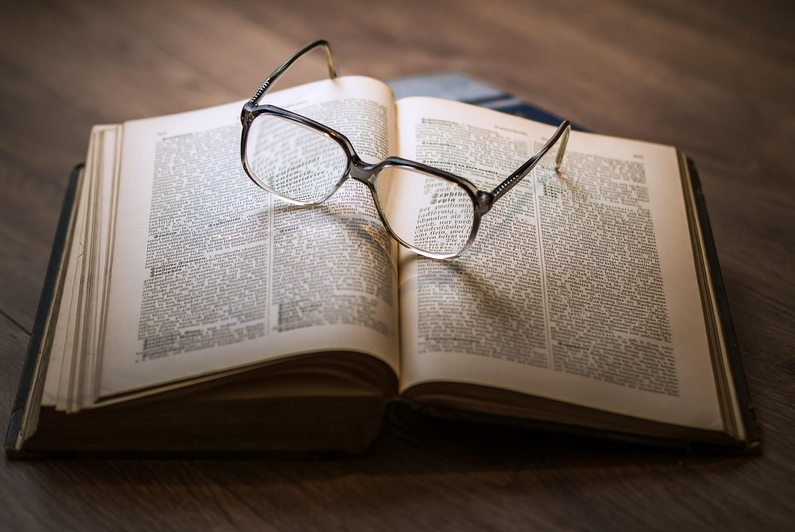
A picture of a open book with a pair of glasses on them.
Image By Dariusz Sankowiski from Pixabay

My Shot List

My transcript with added details
Stock Image from Dariusz Sankowski from Pixabay 
Intro Music(0:0-0:10)
Introduction(0:11-0:25) 
A-Roll: A video of me introducing my topic on camera
Audio: Hello, my name is Dena Subhi, and for this project, I wanted to talk about one of my favorite hobbies, which is reading. Since I was a kid, I have found reading to be a relaxing hobby that allows me to explore many different amazing stories.
The benefits of reading (0:26-1:01)  Stock Image from Dariusz Sankowski from Pixabay
 B-Roll: A video of me showing multiple books while my narration continues   
Audio:It’s also a great mentally stimulating activity. This is because reading allows you to explore new interests and learn about many different topics. One of my favorite things about reading is that there is almost always at least one book that somebody will enjoy. Whether you like science fiction, fantasy, comic books, or any other type of book, there will almost always be one you can really enjoy. While it can be difficult at times to figure out what types of books you will enjoy the most and which ones best suit your interests, once you figure it out, reading can become incredibly fun. 
Stock Image from Dariusz Sankowski from Pixabay 
My favorite genres and books (1:02-1:42)
A-Roll: A video of talking about my favorite genres on camera
Audio: My favorite genres to read are murder mysteries and fantasy books because I find their stories to be exciting and that they often have really interesting characters. 
B-roll: A video of me showing the Six of Crows Series while my narration continues
Audio: Some of my favorite fantasy series are Percy Jackson by Rick Riordan and Six of Crows by Leigh Bardugo. Some of my favorite murder mysteries are The Disappearance of Rachel Price and A Good Girl’s Guide to Murder, both by Holly Jackson. I like murder mysteries because I enjoy watching the main character try to figure out who the killer is before it’s too late. I enjoy fantasy because I have always loved learning about mythical worlds and the different adventures the characters have.
Conclusion (1:43-2:00)
B-roll:Title card that says “Go find a story you will love” with stock image from Erik Mclean from Pexels.com 
Audio: In conclusion, I think reading is an amazing hobby and that you should give reading a chance even if you don’t think you will like it because I’m sure you will be surprised and be able to find a book you love. Thank you for listening to my project.

Video Project Checkpoint

My Equipment

For this project, I mainly just used my phone to record my A-roll and B-roll videos. I also used Clipchamp to edit my clips and images together.

Visual Material

For this project, I used stock images from Pexels and Pixaby, along with A-roll and B-roll videos that I recorded. At the end of my video, I included a title card. I used these visuals to make sure my video stayed interesting.

Bluest Myth Out There – A Podcast by Glar5

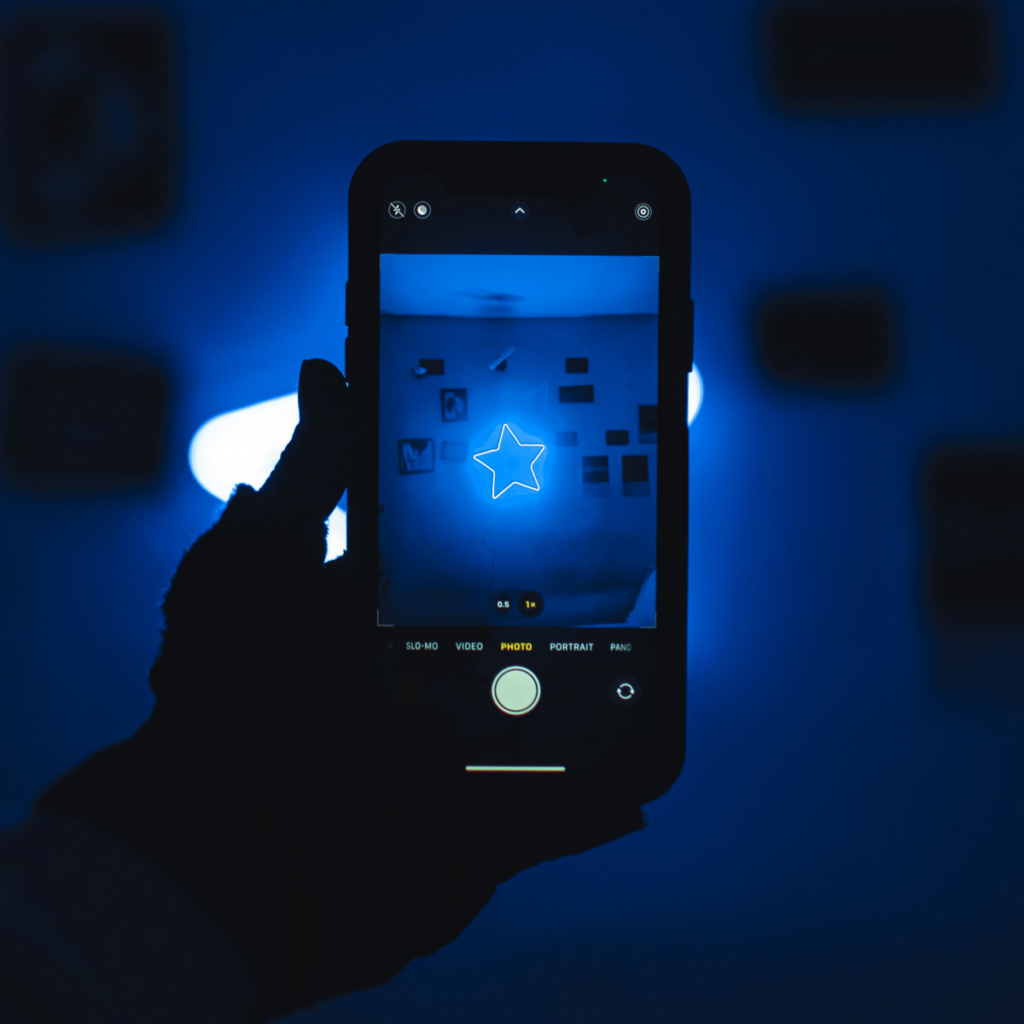
A person's hand holding up a phone with the camera app open with a blue start in the background that illuminates everything in blue, including picture frames.
CC0 Public Domain

The Blue Light Myth

Transcript (Click to View)

Transcript

Speaker 1 is Glar5

[introduction music]

[alarm blaring, then a yawn]

00:00:11 Speaker 1

Have your parents ever demanded your phone at night so you’d actually go to bed? Sure, it was probably because you had a habit of staying up till 3am. But the fear of blue light definitely plays a role. What if I told you that it might not just be blue light that keeps you up at night?

00:00:27 Speaker 1

Within your retina are specialized cells called iPRGCs, intrinsically photosensitive retinal ganglion cells, which act like built-in alarm clocks. They measure the amount of light so they can set your body’s master clock. Morning light signals cortisol to keep you awake and simultaneously your body starts a 16-hour countdown and once this hits zero it releases melatonin to make you sleepy.

00:00:54 Speaker 1

This is exactly why blue light should be considered a myth. Though iPRGCs are most sensitive to blue light wavelengths, scientific studies have shown that total light intensity matters almost as much.

00:01:07 Speaker 1

A 2011 study published by the Journal of Clinical Endocrinology and Metabolism states, “As a result of this exposure to electrical light between dusk and bedtime, presleep levels of melatonin were reduced by 71.4% and total daily levels of melatonin were reduced by about 12.5%.” While blue light is the hardest on melatonin production, other light sources can cause similar levels of harm to sleep.

[alarm blaring]

00:01:36 Speaker 1

Hey, I’m not done yet! Sheesh, that was jarring.

00:01:40 Speaker 1

Anyways, the solution isn’t about the color of light coming out of your screen, rather it’s actually about the amount of light. If you want to use your phone at night, the best solution is to dim your screen and keep the phone further away from your face. You might really want to consider keeping your body clock in check.

[outro music]

Production of the Podcast

Equipment?

I used my Samsung Galaxy S25 Ultra voice recording app to record the audio. The audio from my prior blog post wasn’t as high quality as I had liked so I rerecorded and took testing samples to ensure there was no background noise like fans or too much movement. For the editing, I did that on my laptop which involved transferring over the audio files.

Editing Software?

The software that I used is called Soundtrap. It is free to use and was extremely easy to learn. I really enjoyed the editing process. First, I added all of the audio files to the editor and then began splitting them to trim out several seconds of silence. After that, I was able to organize everything, such as putting the intro at the beginning and outro at the end. I had to trim down some sections so that I was exactly at 2:00 minutes.

Sources

Research for the Podcast

Melatonin and Sleep – NIH

Exposure to Room Light before Bedtime – JCEM

Melatonin Suppression by Light – NIH

Circadian Rhythm – Sleep Foundation

Melatonin – Mayo Clinic

Attributions

Phone Photography of a Very Blue Room

Intro and Outro Music

css.php