Who Am I Online?

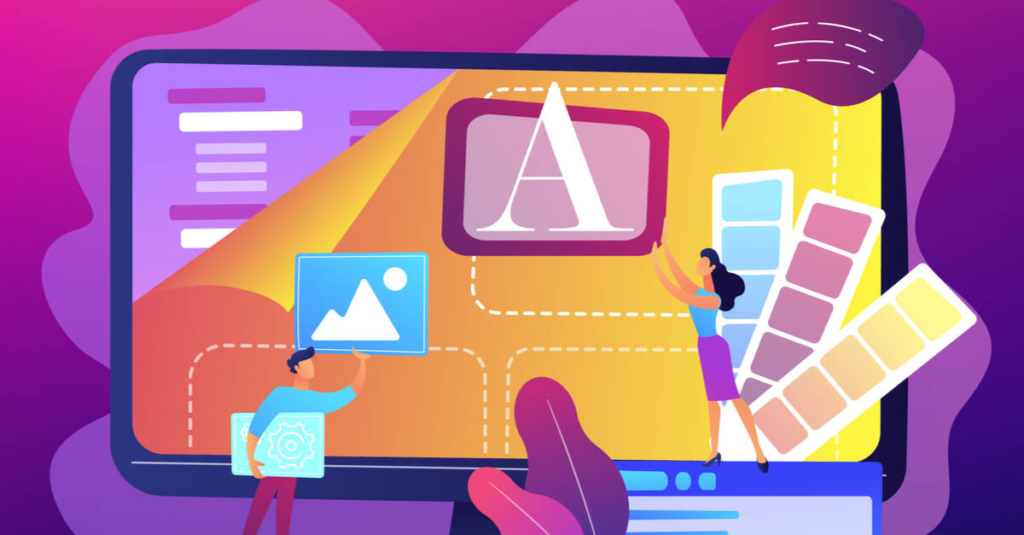
Two people place blocks with an "A" and an image of a mountain on a giant orange computer screen. The top left corner of the screen peels off the computer like a page turning. In the right corner, color pallet strips hang off the computer. A question box hangs off the top right corner of the computer.

Why this Domain?

Choosing the Right Domain

In this module, we discussed the importance of choosing a unique name that can be carried with you after school. To create a good domain name, you have to consider both the length and specificity of your domain. A memorable domain name is a shorter one. For our course specifically, it is also important not to choose an overall domain name that isn’t too specific to the course. While the subdomain can be more specific, the main domain is something that can be carried with you after the class and changed with you, so it shouldn’t be so specific it is rendered unusable after we leave the class.

The meaghanvandyke.com Story

I chose this domain simply because it’s my name! I wanted the domain name to reflect my work when it was published and be something I could carry with me after Mary Washington, so choosing my own name could both guarantee memorability and longevity for the site.

Personal Online Identity

How Will This Domain Be Used?

While this sub domain is specific to posting about digital studies projects, Domain of One’s Own is designed to last after my time at Mary Washington. After graduation, I plan to use this domain to build my own online portfolio as a writer, like many professional writers do to their own portfolios. A great example of this is novelist Rachel Lippincott’s website, whose organizational layout is something that can be mimicked through Domain of One’s Own’s tools and applications. I chose WordPress as an application for both my main domain and my subdomain because it is easy to navigate and used most commonly in our digital studies class.

Who am I?

Ahh, my first blog post! Though I’ve created this site for a class, I’m excited to continue using it for much time to come; I’ve dreamt about making a website for years, toying around with vehicles like Google Sites, but never could get it just the way I wanted. I’m optimistic that I’ll learn of all the ways to make this site my perfect little nook of the Web.

I’ve been assigned to create a “Who am I on the web?” post, but I think to paint an accurate, full, and clear image of who I am on the web, you should know a bit about who I am in real life. I am aware that that could sound terribly boring, so I’ll try my best to keep it brief.

Who am I in Real Life?

I’ll spare you the ‘first date’ Q & A’s of where I was born and favorite colors (though my favorite color is yellow, if you were wondering).

A Creative.

When it comes down to it, I’ve found that I am deeply fulfilled whenever I am creating something. For me, that looks like being behind or in front of a camera, editing photos and videos, tailoring an Instagram feed to look cohesive, decorating a room, putting together an outfit or gym outfit, planning an outing or event and watching it come to life- you get the jist. I am the friend that takes all the photos and I’ve been told that I “see life cinematically,” which I think is a sweet thing to be remembered for. Moreover, I like to use this creativity to reach, connect with, and help people. I’m a wellness coach whom uses social media to run her biz, and a lot of my day-to-day involves content creation to run and market that business. So I do in fact already have an online presence. Because the whole point of my business is ‘healthy active lifestyle,’ my Instagram includes almost everything that I do so that I can show others that its possible to pursue all of your interests and passions while also staying healthy and active. I also, though I consider it a hobby and not a job, am a photographer. I just love to capture memories.

So…how is that different from who you are on the web?

Well…it’s not really. I like to think I do a decent job at being authentic online. What you see is what you get, really. My presence on the web is a whole bunch of living in my own Pinterest board. Detail shots, a cute workout set, girls night outings, iced coffee, my favorite post workout meal. If you can’t picture it yourself, I’ll link my Instagram account so you can see for yourself (also, shameless self plug).

A spread of food including a fruit tray, two colorful salads, a bottle of kombucha and a bouquet of flowers lay on a picnic blanket on the grass.

Love Yourz

The domain name I’ve chosen- Loveyourzkai- isn’t new to me at all. As a matter of fact, it’s been the name I’ve used for my online presence for a couple years. ‘Love Yourz’ is my favorite song by J. Cole, of which the whole premise is not comparing your life and things in your life to others and to instead “Love Yourz.” I believe this name fits perfectly with my online presence considering everything that I share and will continue to share, because it is a good reminder during every season of life! I even have the lyrics tattooed;) And then I just added ‘Kai’ to the end because it’s catchy, duh.

I hope you come to ‘love yourz’ through reading and engaging with my blog!

Love Yourz,

Kai:)

P.S. True story: I worked on this blog post for a bit and then saved it to my drafts, hoping to later finish it and realized that I didn’t know how to log back in to my dashboard. Thank God for UMW’s Domain of Ones Own Website building site!

Who am I on the web?

Why and how did I choose my domain name?

Why?

I wanted my name to be apart of my domain name, since it’s my domain. I didn’t want my full first name linked to it, so I decided to go with just the initial and full last name. For my subdomain, I just added dgst101 to the front to differentiate between my dgst class subdomain, and my main domain.

How?

I took the first initial from my first and middle name, and put it next to my last name. I knew my last name would be available without the initials, but I wanted my domain name to be a little more unique than just my last name.

Why domain names are important

Why?

Having a unique and easy to remember domain name is crucial to building your brand on the internet. If it’s just your name, it helps people find your domain easier, which helps get your name out the door. Creating a domain name tied to your brand or what you want to put out in the world is a great start to connect your ideas to the public. To read more about the importance of domain names, go to “The Importance of The Domain Name for Your Online Business.”

A mouse clicking on a website url.

Navigating the Digital Age: Separating the Facts from the Fancy

False & Inaccurate Information on the Web

False information can spread rapidly online, with there being multiple methods out there. Clickbait being the main one. Clickbait refers to misleading headlines and thumbnails on a specific content to entice the viewer to click on it. When misinformation on specific content gains media traction, it usually spreads rapidly due to the lack of review by the people. If one person decides to post some information that is factually incorrect, others may repost it thinking that it is the correct thing without actually fact checking it. Social media doesn’t good a job with helping this, as the algorithm is indented to push out information if the post is on-topic about something trending.

Impact of AI on Misinformation and Disinformation on the Web

AI has been around for a long time, but it is now getting more creative by the day. AI has greatly impacted the community and introduce some highs but a lot of lows. In terms of misinformation and disinformation, AI has become a double edge sword. On one hand, it can supply you with wonderful tools that can help you in problem-solving and can come to you in efficient pace. And on the other hand, depending on what you want it to compute, it can come up with convincing fake content in seconds. Similar to what we call hallucinations and can occur when an AI tool generates responses that are inaccurate or completely fabricated. AI tools don’t “think” they just generate content based off whatever prompt is given and predicts likely responses based on its training data. For example, ChatGPT, generates words from articles and web searches and gives it an outcome based off the prompt, The information it is pulling from can still be wrong.

Interaction with Microsoft’s Copilot

I chose this title because half of it was what the AI Suggested from the and the other half of it is a saying that I say a lot and I feel like it fits in perfectly with this.


You
Sent by you:
Hello, Copilot, how was your day?
Copilot
Sent by Copilot:
Hello! My day has been great, thanks for asking. How about yours? Anything exciting or interesting happening?

You
Sent by you:
I am making a blog/post about ai, care to give me a few title ideas you have in mind. It's about Media Literacy and AI, and I cover topics about false and inaccurate information on the web and the impact of AI on misinformation and disinformation on the web
Copilot
Sent by Copilot:
That sounds like a fascinating and timely topic! Here are a few ideas you might consider for your blog post:

1. Navigating the Digital Age: Understanding Misinformation vs. Disinformation
2. The Role of AI in Spreading False Information Generative AI
3. AI in Detecting and Combating Misinformation AI Tools for Verification
4. Ethical Considerations and Challenges Bias in AI
5. Media Literacy in the Age of AI Educational Initiatives
Practical Tips
6. Future Trends and Predictions Evolving AI Technologies

Would you like more titles on any of these topics or help with structuring your post?

You
Sent by you:
I like all of them, but I want more options, care to give me some more?
Copilot
Sent by Copilot:
I’m glad you liked those ideas! Here are a few more to consider:

7. AI and Social Media Algorithms
8. AI in Journalism
9. Psychological Impact of Misinformation
10. AI and Public Policy
11. Case Studies of AI-Driven Misinformation Campaigns
12. The Role of Big Data in Misinformation
13. AI and the Future of Media Literacy Education
14. Community-Based Approaches to Combat Misinformation

Feel free to mix and match these titles or let me know if you need details for any topics!

You
Sent by you:
Thank you so much. I found a title I was looking for.
Copilot
Sent by Copilot:
That’s fantastic to hear! I’m glad I could help. If you need any more assistance with your blog post, whether it’s more ideas, structuring your content, or anything else, feel free to ask. Good luck with your writing! 📚✨

You
Sent by you:
I appreciate it. Have a great day!
Copilot
Sent by Copilot:
You’re very welcome! I’m glad I could help. Have a wonderful day, and happy writing! 😊✍️

You
Sent by you:
You too!
Copilot
Sent by Copilot:
Thank you! Take care and have an awesome day! 😊👋

You
Sent by you:
Actually, one quick question, thoughts and feelings about AI?
Copilot
Sent by Copilot:
As an AI, I don’t have personal thoughts or feelings, but I can share some insights on the topic!

Thoughts on AI:
Potential: AI has the potential to revolutionize many fields, from healthcare and education to entertainment and transportation. It can help solve complex problems, improve efficiency, and create new opportunities.
Challenges: There are also significant challenges, such as ethical considerations, privacy concerns, and the need for robust regulations to ensure AI is used responsibly.
Future: The future of AI is exciting, with ongoing advancements in machine learning, natural language processing, and robotics. These developments could lead to even more innovative applications and solutions.
Feelings about AI:
While I don’t have feelings, I understand that people have a wide range of emotions about AI. Some are excited about its potential, while others are concerned about its impact on jobs, privacy, and society. It’s important to have open discussions and consider diverse perspectives to navigate these changes effectively.
If you have any specific questions or need more information, feel free to ask!

You
Sent by you:
Interesting. Thanks
Copilot
Sent by Copilot:
You’re welcome! If you have any more questions or need further assistance, feel free to reach out. Have a great day! 😊

Who am I on the web?

woman's face surrounded by a circle of different application logos and pictures of others in the background.

What is Online Identity?

Definition

Online identity is simply what it sounds like. Your identity online is how you present yourself digitally. The things you post, the pictures you share, and the people you interact with all impact your online identity.

Why is it Important?

It’s important to consider your online identity for many reasons; a couple being: what you post stays online forever and it is observed by potential employers. It is crucial to ensure that you are representing yourself as you truly are, while also keeping your online identity detached from you personally; essentially you don’t have to post your every thought online. This website shares the importance of maintaining your online identity and provides some tips for managing: Online Persona.

My Online Identity

Googling Myself

A good way to see your presence online is to simply Google your name. After Googling my name, I did not find anything that relates to myself. I found other people with the same name, but nothing for me personally. This is probably be attributed to the fact that aside from Facebook and Instagram, I don’t have much social media or online presence. Also, when creating usernames I tend to use simply my first initial and last name, which could lead to me not having much of a presence.

Searching Myself on Social Media

Since I couldn’t find myself on Google, I decided to take it a step further and search my name on social media, specifically Facebook and Instagram. When searching for myself on Facebook, I found my profile very quickly and found all of my pictures and posts, despite me having my account pretty private and directed towards ‘Friends Only.’ This led me to quickly alter my account to be unviewable by the public, aside from my profile photo, as online privacy is important to me. When searching for myself on Instagram, I couldn’t find my account. This is what I had assumed would happen, as my username is a nickname of mine, as opposed to my full name.

Why did I pick this Domain Name?

My domain name is pretty simple; I picked amkincaid.net. This is simply my first and middle initial, along with my last name. I didn’t really want my first and last name as the website name, since it seems less private, so I chose my initials as a way to ensure it’s more private. I also decided to include my middle initial, since four out of five people in my family are ‘A. Kincaid.’

Who am I on the Web?

A person is sitting in front of a desktop computer, viewing a screen displaying a futuristic interface with a humanoid figure at the center, surrounded by various abstract technological and scientific icons like atoms and molecular structures.

Online Identities

We live in a time where almost everyone has a digital presence. That could be on social media, LinkedIn, or even company websites. Some people create these online identities to match who they are offline. While others create an identity that is the complete opposite of who they are. There are also people who just omit parts about them and their life that they do not want the whole world to know.

Digital Personas

A digital persona is what someone creates when they don’t want to put who they really are out on the internet. Sometimes a digital persona is completely fake and is created by adding bits and pieces from different people together. There are some people who are trying to recreate historical figures through making a digital persona. Since digital personas are copies if the original, we have to make sure that we are being respectful to the people that are being represented. More information about digital personas read Creating Valuable (and Trusted) Experiences With Digital Personas.

Who am I

My online presence

For me I do not want to give the internet full access to my life. I have social media and other accounts, but I don’t post that often. When I do post it tends to be on birthdays. I also like to keep my accounts private, so I know who has access. I have the platforms that are supposed to help with job searching like LinkedIn. I want to keep my life off of the internet as much as I can.

Copyright

Image of a thief carrying a sack in front of a copyright symbol, indicating theft.
Image by Mohamed_hassan via pixabay.com

“All Rights Reserved”

I think copyright is a very important law. It has the ability to protect creators and the work that they create. The world can be very competitive, and lots of people will use underhanded tactics to get ahead. This can include the stealing of peoples works and intellectual property. Without this necessary legal protection there would be so many copycat works it would be impossible to tell who was the original. Copyright can help those creators receive the credit and compensation they deserve for creating that work.

Although it can be a double edged sword. Particularly on sites like Youtube, corporations and creators can use copyright law to strike or takedown videos that criticize their work or products. The problem is this prevents necessary discussion that can be used to make said product or work better, or expose it for being harmful or inaccurate, etc. Copyright can help to protect creators, but can also be weaponized against them for unscrupulous reasons.

My copyright

I have chosen to make this site’s copyright all rights reserved. This means I retain all the rights to work published on this site. While I think that the open sharing of ideas and content is very important, I am looking at this from a privacy standpoint. I am cautious of posting too much on the internet and would like to prevent any unauthorized use of my blog posts on this website. Even with this copyright protection in place, fair use still allows criticism or the use of work on this site for educational purposes.

Imaged of a green door sign saying reserved in gold lettering.
Image by OpenClipart-Vectors

“Unraveling the Web: The Impact and Spread of False Information Online”

Reasons for false information on the internet.

False information spreads like wildfire on the internet and across social media. A single sample of false information getting posted on the internet can cause a chain reaction of reposts and new posts/comments spreading the information very quickly. Social media algorithms are also not great at filtering out false information, so it is also spread through many different algorithms. False information on social media is rampant today, and it’s effects can be dangerous.

AI’s impact on False information

False information has been more difficult to find due to AI. AI tries to help by providing answers to questions or commands, but it has trouble filtering out accurate information and misinformation. This can lead to more false information being spread and makes it easier to find misinformation throughout the internet. This leads to people unknowingly spreading false information across the internet believing it is true, making it more difficult to find out what is true or not and breaking the trust of internet users for information that might also be true. The increased use of the internet makes it difficult to use fact checking verification methods and validate accurate information.

smartphone with a "share" icon, surrounded by various social media icons like Twitter, Facebook, and hashtags, representing a network
You
Sent by you:
Give me an interesting title for a blog on false information being spread on the internet
Copilot
Sent by Copilot:
How about this for a title: “Navigating the Web of Lies: Unmasking False Information on the Internet”?

Does that capture the essence of what you’re looking for?

You
Sent by you:
Hmm, not quite. How about something shorter?
Copilot
Sent by Copilot:
How about this: “Debunking Digital Deception”?

Does that hit the mark?

You
Sent by you:
maybe try something else
Copilot
Sent by Copilot:
Sure, how about “Internet Myths: Exposing the Truth”?

Does this one resonate with you?

You
Sent by you:
Try a title focusing on false inforamtion a bit longer
Copilot
Sent by Copilot:
How about this: “Unraveling the Web: The Impact and Spread of False Information Online”?

Does this align better with what you’re looking for?

You
Sent by you:
Yes I like that one
Copilot
Sent by Copilot:
Great! I’m glad you like it. If you need any more help with your blog, feel free to ask. Happy writing! 📚✨

Deceived by the Screen: Web Misinformation and AI’s Dark Side

Dark background with computer screen and a robot with red eyes and a large hand typing on the computer's keyboard.

False and Inaccurate Information on the Web

Vulnerability is a key reason why web users accept false and inaccurate information. Janna Anderson and Lee Rainie write on the future of this web problem in the article The Future of Truth and Misinformation Online. The authors bring forward the fact, based on a 2016 study, that people find and read news articles that more often reassure them on their own views. When a user is seeking information that specifically aligns with what they believe they become vulnerable to believing all the news that they read. The information that they trust is true then gets passed along to other people and it creates a social condition or norm that everyone conforms to. This becomes a confusing out of control spiral of information that news outlets are no longer in control of, but rather peers are.

Impact of AI on Misinformation and Disinformation on the Web

AI takes existing information, listens to your desired task, and generates possible solutions. However, those solutions are not always accurate, rather they are only similar to information it is programmed to know. Using this tool often exaggerates a user’s trust in information on the web. AI is usually not factually correct but is programmed to throw words and phrases together that make some sense. People are gullible to the answers that AI provides them and continue the spread of false information. It becomes impossible to tell if information on the web originated from human intelligence or made-up artificial intelligence.

Interaction with Microsoft’s Copilot

I chose the title that I did because it is the best representation of the information I provided in the blog. My focus is on how people are affected by false and misleading information on the web, and I feel that the title clearly portrays that. I wanted the negative impact of AI to be clearly represented in the title as well. I feel like the title could fall on the News Journalism part of the spectrum of truth. I gathered information from the source and shared my perspective of it on this blog: I believe this to be impartial coverage of all of the information the source provided.

Sent by you: Can you provide me with engaging blog title about false and inaccurate information on the web and the impact of Artificial Intelligence?

Copilot: Sure! Here are a few engaging blog title ideas for you:

1. "Navigating the Web of Deception: How AI is Tackling Online Misinformation"
2. "Truth vs. Tech: The Role of AI in Combating False Information Online"
3. "From Fake News to Fact-Checkers: AI's Battle Against Digital Deception"
4. "The AI Revolution: Fighting Inaccuracies and Misinformation on the Internet"
5. "Beyond the Headlines: How Artificial Intelligence is Shaping the Future of Online Truth"

Do any of these resonate with you?

Sent by you: Not quite what I'm looking for. Do you have any other ideas?

Copilot: Absolutely, let's try some more:

1. "AI vs. Misinformation: The Digital Age's Ultimate Showdown"
2. "Unmasking the Web: How AI is Exposing Online Falsehoods"
3. "The Truth Guardians: AI's Role in the Fight Against Internet Lies"
4. "Decoding Deception: AI's Impact on Online Information Accuracy"
5. "AI and the Quest for Truth: Battling Misinformation in the Digital Era"

How do these sound? Feel free to let me know if you have a specific angle or tone in mind!

Sent by you: Can you give me a title that is less about AI and more about web users being vulnerable and gullible to inaccurate information on the web?

S

Copilot: Sure thing! Here are some titles that focus more on the vulnerability of web users to inaccurate information:

1. “Caught in the Web: How Gullible Are We to Online Misinformation?”
2. “The Digital Trap: Why We Fall for False Information Online”
3. “Gullibility in the Age of Information: Navigating the Online Misinformation Maze”
4. “Deceived by the Screen: The Vulnerability of Web Users to Inaccurate Information”
5. “Trust Issues: How Easily We Believe Falsehoods on the Internet”

Do any of these hit the mark? Let me know if you need more options or a different angle!

Sent by you: I like the third one, can you add anything to it?

I’m glad you liked it! How about this enhanced version:
“Gullibility in the Age of Information: Navigating the Online Misinformation Maze and Protecting Yourself from Digital Deception”
Does this capture what you’re looking for? Feel free to let me know if you’d like any further tweaks!

Sent by you: Can you add a little bit about AI in it?

Absolutely! Here’s an updated version:
“Gullibility in the Age of Information: Navigating the Online Misinformation Maze and How AI Can Help Protect You from Digital Deception”
Does this work for you? Let me know if you’d like any more adjustments!

Sent by you: Could you make it shorter and include how AI provides negative results to users?

Sure! How about this:
“Gullibility in the Digital Age: Navigating Misinformation and the Dark Side of AI”
Does this fit what you’re looking for?

Sent by you: Can you shorten the title: "Deceived by the screen: navigating misinformation on the web and the dark side of AI"

Copilot: How about this:

"Deceived by the Screen: Misinformation and AI's Dark Side"

Does this work for you?

Sent by you: Can you include that the misinformation is coming from the web?

Copilot: Of course! How about this:

"Deceived by the Screen: Web Misinformation and AI's Dark Side"

Does this capture what you're looking for?


Sent by you: Perfect! Thank you!

The Great Online Illusion: Unveiling Truth in the Digital Age

Image of an opened book with mountains and rocks coming out of it while planes and planets surround it. The text at the to says The Great One Illusions but the letters are overlapping.

Reasons behind false information and inaccurate information on the web

A lot of the inaccurate information that is spread on the web is because one person post false information and others repost it with checking if it is correct first. People tend to post false information as a way to get more views or likes on their posts. It is very common now because of how popular social media has become. It has become a lot easier to spread false information without even realizing it. You can find more information on this topic you can look at this article from USC today that discusses why fake news spreads so quickly on social media platforms. It also can be used as a way for people to get people to reveal personal or sensitive information about themselves. For example, It is common for scammers to send emails or text messages to people saying that their subscriptions cannot be properly paid in hopes that people will respond and give them their banking information. With new advances in technology it has also made it easier for people to give others control over their devices to help with repairs and people can download viruses onto someone else computer. Another reasoning behind false information is that AI tools are not able to understand human emotions. When someone searches a question through an AI tool it will try to find any answer to the question even if it doesn’t make sense to us. This is why it is always important to fact check information through reliable sources to ensure it is accurate.

Impact of AI on misinformation and disinformation on the web

AI has made it more difficult to determine what is misinformation and disinformation on the web. AI tries to help you find the answers to the questions it’s asked, but AI is not capable of deciphering what information online is correct or incorrect. This leads to a lot of misinformation being spread. It can also make it easier for people to spread disinformation online.

Copilot

Out of the options I was given on Copilot I picked “The Great Online Illusion: Unveiling Truth in the Digital Age” because I found it very eye catching. I thought it helped support the idea that it can be difficult to determine what information is true online and what is false.

You
Sent by you:
can you make me an engaging blog post title about what is real on the internet
Copilot
Sent by Copilot:
Sure! How about this:

“Unmasking the Digital Mirage: What’s Real on the Internet?”

Does this capture the essence of what you’re looking for? If you have any specific angle or focus in mind, let me know!

You
Sent by you:
can you give me another title
Copilot
Sent by Copilot:
Absolutely! How about this one:

“Decoding the Web: Separating Fact from Fiction Online”

I hope this one resonates with you! If you need more options or have a specific theme in mind, feel free to let me know.

You
Sent by you:
Can you give me a more interesting title
Copilot
Sent by Copilot:
Sure thing! How about this one:

“The Great Online Illusion: Unveiling Truth in the Digital Age”

I hope this one grabs attention! Let me know if you need more options or if there’s a specific direction you’d like to take.

You
Sent by you:
That works! Thank you!
Copilot
Sent by Copilot:
You’re welcome! I’m glad you liked it. If you need any more help or have other questions, feel free to ask. Happy blogging! 😊

css.php