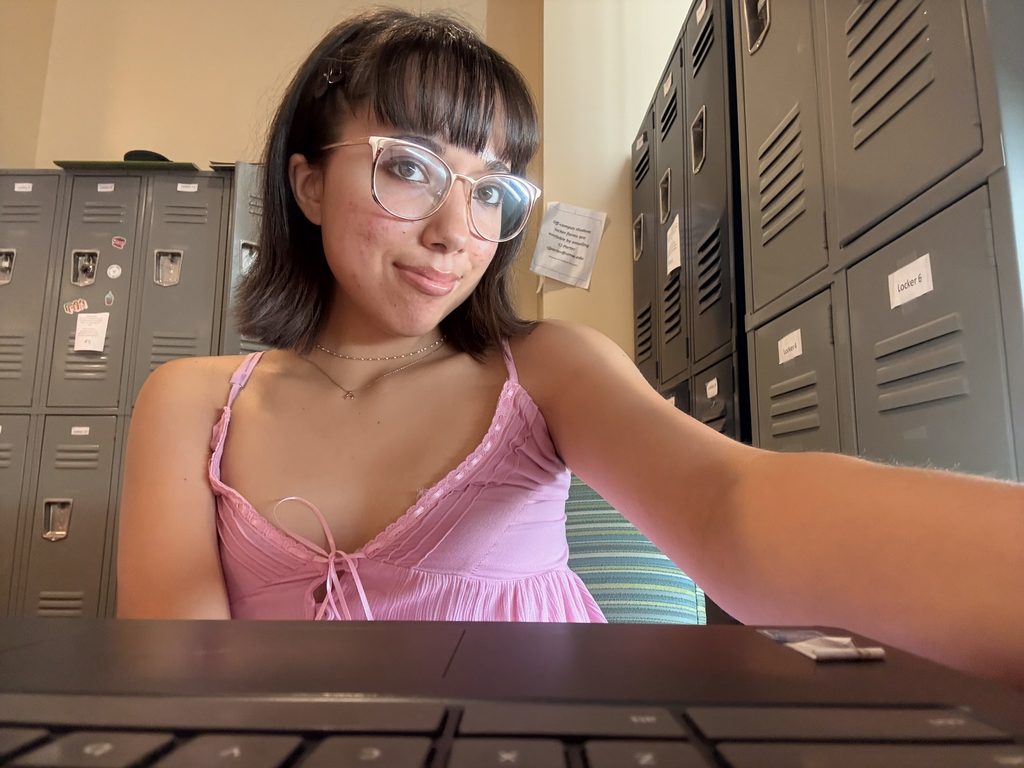
Geneva is a transfer student and junior at the University of Mary Washington. She graduated with an Associate’s degree in Liberal Arts from Piedmont Virginia Community College in the spring of 2026. She is majoring in psychology with the ultimate goal of earning a master’s degree and practicing as a licensed therapist. In her free time, she enjoys spending time with her husband, going to the gym, and drinking an outrageous amount of coffee.
Bubbly is a junior UMW transfer student with a focus in psychology. She loves to play video games and doing her makeup. She also loves fashion, but rarely has enough money to get what she wants.
Kylie is currently a sophomore at UMW where she is majoring in Leadership and Management. She takes all of her classes online and works in Marketing. In her free time, she enjoys running, spending time with her cat, and taking selfies in her car.
Emma is a transfer student at UMW and studies Business Management and Entrepreneurship; she is in her sophomore year. When she is not serving at Tim’s on Lake Anna, she’s serving the country. Whenever Emma finds free time in her busy schedule, she loves to bake.
Openness on the internet refers to the free availability of some online work. Open content can exist in the form of blogs, videos, code, and more.
How?
To create open content, one might use, or even create, an open platform to share on. WordPress is a wonderful example of an open platform, as it allows users to create and access websites for free.
Why?
Creating open content is a way of building community online and spreading knowledge. Because open resources are free, more people can use them, ultimately making creation and self-sufficiency more attainable. The more you give to a community, the more it can give back to you.
When something is created with accessibility in mind, there is an expectation that people with disabilities can use it with the same ease as people who are not disabled. This expectation applies to the internet, too.
How?
By using features such as heading structure, captions, alternative text, and descriptive link text, web designers can make their sites accessible. Often, platforms create ways for users to opt into accessible design features. YouTube, for example, allows creators the option to create their own captions or rely on the automated ones the platform creates.
Why?
By making a piece of internet content accessible, one is able to serve a wider audience and will potentially get their product, service, or message to more people. Additionally, there are lots of accessible features that end up benefiting people they weren’t originally intended for. For example, a hearing person might use closed captions when watching something in a loud space.
Arianna is currently a senior and commuter student at the University of Mary Washington. She transferred from Hollins University to UMW her sophomore year. She is majoring in English with a minor in professional writing, and enjoys old lady hobbies and reading.